An honest comparison for facility managers and building operators across Massachusetts, Connecticut & Rhode Island.
Quick Answer
For most modern commercial facilities, green cleaning matches the performance of traditional cleaning while reducing chemical exposure for occupants and crews. Traditional cleaning still has legitimate uses in specific high-pathogen environments where bleach-based disinfection is the clinical standard. The right approach for most buildings in MA, CT, and RI is a hybrid: green chemistry for daily cleaning, traditional disinfectants applied selectively where they remain the gold standard.
Green cleaning has moved from niche premium offering to mainstream option in commercial cleaning. EPA Safer Choice and Green Seal certifications now exist for nearly every category of cleaning product, performance has caught up with conventional chemistry, and pricing has compressed to the point where cost is no longer the deciding factor for most facilities.
That does not mean green cleaning is always the right answer. For specific high-risk environments and certain pathogen control situations, traditional cleaning remains the clinical standard. The honest comparison is more nuanced than the marketing on either side suggests.
This guide is for facility managers and building operators across Massachusetts, Connecticut, and Rhode Island who want to make a clear-eyed decision about how their facility should be cleaned. The post covers what each approach actually means, where they diverge, when each is the right call, and how to figure out which is the better fit for your building.
Table of Contents
- What Green Cleaning Actually Is
- What Traditional Cleaning Actually Is
- Side-by-Side: Where They Overlap and Where They Diverge
- When Green Cleaning Is the Right Choice
- When Traditional Cleaning Is the Right Choice
- The Hybrid Case (Most Facilities Fall Here)
- Common Misconceptions About Green Cleaning
- How to Figure Out What Your Facility Needs
- What to Ask a Vendor About Either Approach
- The Bottom Line
- Frequently Asked Questions
1. What Green Cleaning Actually Is
Green cleaning is a system, not a product swap. It combines third-party-certified cleaning chemistry, low-impact equipment, and procedures designed to reduce environmental and health impact while still meeting performance standards.
On the chemistry side, certified green products carry verifiable third-party labels: EPA Safer Choice, Green Seal, EcoLogo, or Cradle to Cradle. These certifications evaluate ingredient toxicity, biodegradability, packaging, and lifecycle impact. Generic claims like “eco-friendly” or “natural” without these certifications mean little.
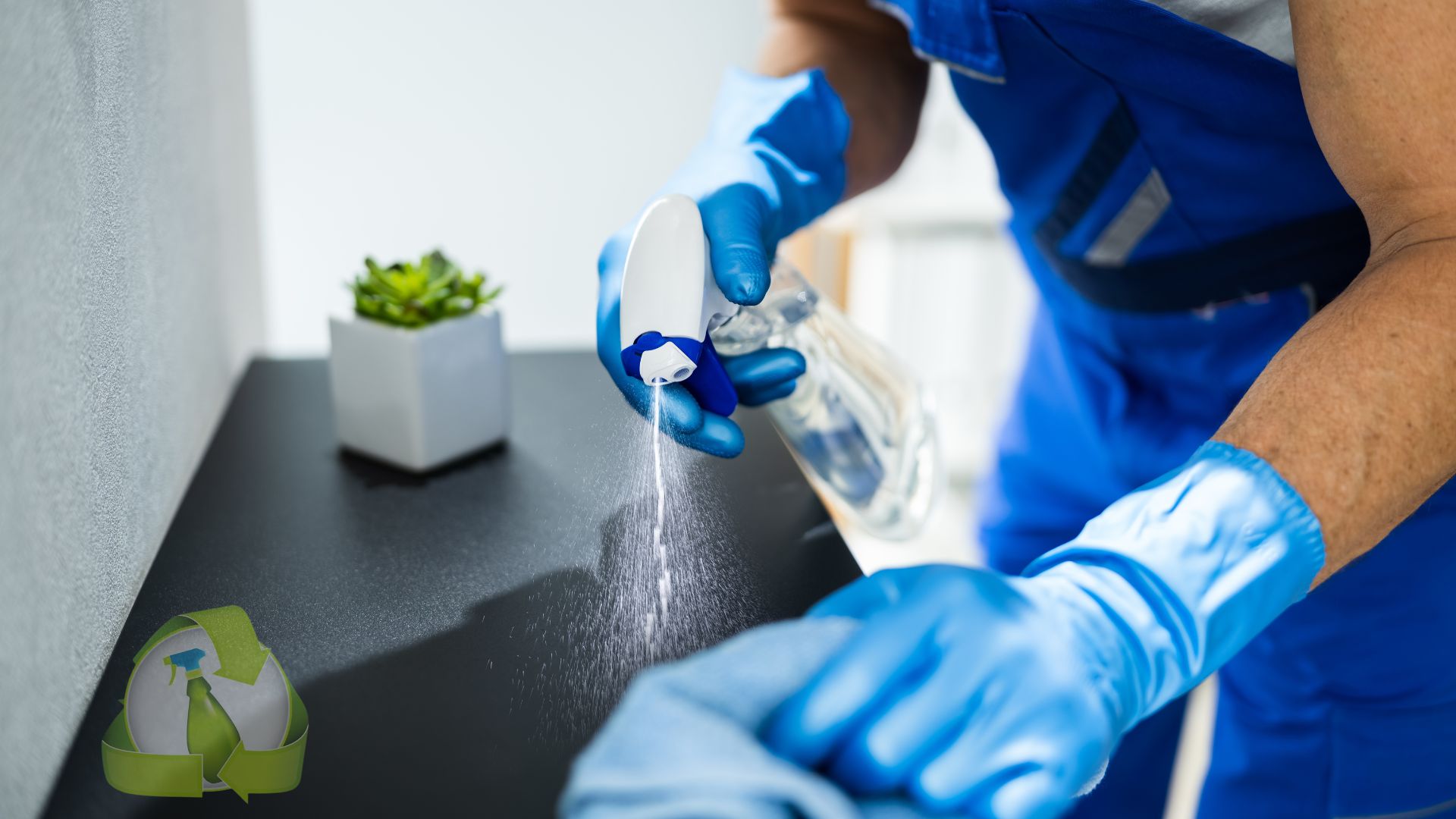
On the equipment and procedure side, green cleaning typically includes microfiber cleaning towels and mop pads (which trap dirt mechanically and require less chemistry), HEPA-filtered vacuum systems (which capture fine particulate rather than blowing it back into the air), reusable rather than disposable supplies (reducing landfill waste), and steam-based cleaning for floors and upholstery (which sanitizes without chemical residue).
Modular Concepts uses these practices across our green cleaning programs in MA, CT, and RI. The system works because each element reinforces the others: better mechanical capture means less chemistry needed, low-residue products mean better indoor air quality, and reusable supplies mean lower long-term cost despite the higher upfront equipment investment.
2. What Traditional Cleaning Actually Is
Traditional cleaning is the conventional approach that has been the commercial cleaning default for decades. It relies on broader-spectrum disinfectants, often petroleum-derived solvents, disposable supplies, and chemistry that prioritizes immediate performance over environmental or health impact.
Common traditional products include quaternary ammonium-based disinfectants, bleach-based products for high-risk pathogen control, ammonia-based glass cleaners, and a wide range of conventional all-purpose cleaners. Many of these products have decades of documented efficacy data and remain the standard in specific clinical and industrial settings.
Traditional does not mean obsolete. The implication that conventional cleaning is automatically inferior is one of the more common pieces of marketing hyperbole around green cleaning. Hospital-grade quaternary ammonium disinfectants, properly applied with correct dwell time, deliver excellent kill claims for most common pathogens. Bleach remains the gold standard for C. difficile and certain other resilient pathogens, and no green alternative has fully matched that performance for those specific applications.
The legitimate criticisms of traditional cleaning are about chemical exposure for crews and occupants, indoor air quality impact from VOCs, packaging waste from disposable supplies, and disposal concerns for some product runoff. These are real issues, but they are not universal across every traditional product or every facility type.
3. Side-by-Side: Where They Overlap and Where They Diverge
Disinfection efficacy is comparable across the two approaches for most common pathogens. Modern green disinfectants registered with the EPA carry the same kill claims for staph, MRSA, influenza, norovirus, and most enveloped viruses. Where the gap remains is in specific high-resilience pathogens, particularly C. difficile spores, where bleach-based traditional disinfection is still the documented standard.
Cost has compressed significantly over the past decade. Where green programs once carried a 30 to 40 percent premium, the gap is now typically 5 to 15 percent for daily commercial cleaning. The premium often disappears entirely once equipment investment is amortized, because reusable microfiber and HEPA systems reduce ongoing supply costs.
Chemical exposure for occupants and crews is meaningfully lower with green cleaning. This matters most in healthcare with vulnerable populations, schools, behavioral health facilities, and any building where chemical sensitivity is a real concern. For a standard professional office, the day-to-day difference is smaller but still measurable.
Environmental impact differs across the lifecycle. Green programs produce less landfill waste from disposable supplies, lower VOC emissions affecting indoor air quality, and reduced runoff impact for products that eventually reach water systems. Traditional programs are not catastrophic on these dimensions but they are measurably worse.
Crew training requirements run higher for green cleaning, not lower. Green disinfectants have specific dwell times and application procedures that crews need to respect. The myth that green cleaning is somehow simpler is exactly backwards. The real difference is what gets sacrificed when corners are cut.
4. When Green Cleaning Is the Right Choice
Green cleaning is the right choice for most modern commercial facilities, and certain situations make the case nearly automatic.
Healthcare facilities serving vulnerable populations have the strongest case. Pediatric clinics, oncology offices, behavioral health practices, and any setting where occupants have immune system, respiratory, or chemical sensitivity concerns benefit substantially from reduced chemical exposure. Indoor air quality matters more in these settings, and the difference is clinically meaningful.
Schools and educational facilities are a strong fit. Children spend more time in their school buildings than most adults spend in their offices. Several states, including Massachusetts and Connecticut, have green cleaning policies for public schools that effectively mandate certified products.
LEED-certified buildings frequently require green cleaning programs to maintain certification. If your facility holds or is pursuing LEED-EBOM (Existing Buildings Operations & Maintenance) certification, green cleaning is generally required, not optional. The same applies to facilities pursuing WELL Building Standard certification.
Tenant spaces with chemical sensitivity concerns. If you operate office space with multi-tenant occupancy, complaints about cleaning chemicals from any single tenant can drive a switch to green protocols. Pre-empting that with a green program is often easier than reacting to it.
Organizations with ESG or sustainability reporting commitments. If your facility is part of a corporate sustainability program with documented environmental targets, green cleaning is one of the easier line items to align.
5. When Traditional Cleaning Is the Right Choice
Traditional cleaning has legitimate use cases. Pretending otherwise is sales fiction, and any green cleaning advocate who refuses to acknowledge these scenarios is not giving honest advice.
Specific pathogen control situations remain bleach territory. C. difficile outbreaks, certain norovirus response protocols, and some emergency biohazard remediation situations call for chemistry that current green alternatives have not fully matched. Healthcare facilities with these specific clinical concerns frequently keep traditional disinfectants in their protocol for targeted use.
Heavy industrial settings with chemical contamination, oil residue, or specialized soil profiles sometimes require conventional solvents that have no current green equivalent. Manufacturing floors, certain warehouse environments, and industrial maintenance applications may need traditional chemistry for legitimate technical reasons.
Post-flood, post-fire, or biohazard remediation situations operate under different chemistry rules entirely. These are typically handled by specialized restoration contractors rather than ongoing facility cleaning vendors, but worth noting that the green-versus-traditional question does not apply in the same way.
Regulatory or accreditation requirements that mandate specific chemistry. Some healthcare accreditation bodies and some federal facility requirements specify particular products or product categories. When the regulator has named the product, the conversation is over.
Outside of these specific cases, the case for traditional cleaning over green cleaning in a standard commercial facility has weakened to the point where it is mostly inertia rather than a genuine technical argument.
6. The Hybrid Case (Most Facilities Fall Here)
The honest answer for most facilities is not strictly green and not strictly traditional. It is a hybrid program that uses green chemistry for daily cleaning and traditional disinfectants applied selectively where they remain the right tool.
In a typical commercial office, this looks like green-certified glass cleaners, surface cleaners, and floor care products for routine work, with one or two traditional disinfectants on hand for specific high-risk applications such as a confirmed illness in the building or post-event deep cleaning. Crews trained on both protocols can switch between them based on the situation.
In a medical office, this gets more nuanced. Daily cleaning of waiting areas, hallways, restrooms, and administrative spaces fits the green model well. Exam rooms, treatment areas, and any space with patient contact often warrant traditional hospital-grade disinfectants applied with documented dwell times. The right vendor knows which surfaces and situations call for which approach.
The hybrid approach captures most of the indoor air quality and environmental benefits of green cleaning while preserving the targeted disinfection performance of traditional chemistry where it actually matters. For most facilities in MA, CT, and RI, this is the structurally best answer.
7. Common Misconceptions About Green Cleaning
“Green cleaning does not disinfect.” False. Multiple EPA-registered green disinfectants carry full kill claims for the pathogens that matter in commercial environments. The “green does not work” framing is roughly fifteen years out of date, but it persists in industry conversation.
“Green cleaning is much more expensive.” Mostly false. The premium has compressed to 5 to 15 percent for daily cleaning, and often disappears once equipment lifecycle is factored in. If your green quote is 40 percent above traditional, the issue is the vendor, not the chemistry.
“Green means unscented.” Mostly accurate but not universal. Most certified green products are unscented or use plant-derived essential oils rather than synthetic fragrances, but “green” and “unscented” are not synonymous.
“All cleaners marketed as green are actually green.” False. Greenwashing is a real problem in the cleaning supply industry. Generic claims like “eco-friendly,” “natural,” or “plant-based” without third-party certification mean nothing. EPA Safer Choice, Green Seal, EcoLogo, and Cradle to Cradle are the certifications that carry real verification.
“Bleach is the only effective disinfectant.” False. Bleach has specific advantages for specific pathogens but is far from the only tool for general disinfection. Hydrogen peroxide-based disinfectants, certain quaternary ammonium products, and specific green-certified disinfectants all carry strong kill claims for the pathogens that matter in most commercial settings.
8. How to Figure Out What Your Facility Needs
Start with your occupant population. Who works in the building, who visits, and what are their specific health considerations? Vulnerable populations push toward green; standard adult office populations have flexibility either direction.
Check your building requirements. Are you in a LEED-certified building? Does your lease or property management agreement specify cleaning standards? Does your industry have regulatory requirements that name specific chemistry? These constraints often answer the question before any preference comes into play.
Look at your sustainability commitments. Does your organization report environmental metrics to investors, boards, or regulatory bodies? Does your parent company or franchisor specify supply chain requirements that include facility services? Documented commitments make the case strong.
Audit current concerns. Are tenants or employees raising chemical sensitivity concerns? Do you have unexplained complaints about indoor air quality, headaches, or respiratory symptoms? These often track to cleaning chemistry and are signals to consider green protocols.
Match cleaning chemistry to facility risk profile. Is there a specific pathogen concern in your industry? A specific hygiene event in your history? These shape where traditional disinfectants belong in your program even within a primarily green protocol.
9. What to Ask a Vendor About Either Approach
Whether you are evaluating a green cleaning program or a traditional one, the right questions surface whether the vendor knows what they are doing or just knows what to put on the proposal.
Ask which specific products are in current use at facilities like yours. Get the brand names. For green programs, request the certifications (EPA Safer Choice, Green Seal, etc.) and verify them. For traditional programs, request EPA registration numbers and Safety Data Sheets.
Ask about HEPA vacuum filtration. This matters in both green and traditional programs, but it is often missing from lower-end vendors. HEPA capture is what prevents fine particulate from being blown back into the building’s air.
Ask about microfiber and color-coded cleaning systems. Even traditional programs benefit from microfiber. Color-coding prevents cross-contamination between zones (restrooms, exam rooms, food areas, general surfaces) and is a strong signal that the vendor has invested in operational discipline.
Ask about laundering procedures for reusable supplies. Microfiber cloths and mop pads need to be laundered properly to maintain effectiveness. Vendors who reuse supplies without proper laundering protocols create cross-contamination risks regardless of whether the chemistry is green.
Ask about crew training. Green protocols require more rigorous procedure adherence, not less. Vendors who cannot describe their training program in specifics are unlikely to deliver consistent green cleaning regardless of what their proposal claims.
Ask about the contract structure. Modular Concepts works on a 3-month minimum followed by month-to-month service with 30-day cancellation notice. Whether you choose green, traditional, or hybrid, that structure means we earn the renewal every month rather than relying on a long-term lock to retain your business.
10. The Bottom Line
Green cleaning is not a moral upgrade and traditional cleaning is not an environmental crime. Both approaches have legitimate places in a well-run commercial cleaning program. The right answer for your facility depends on the population you serve, the building you operate in, and the specific risk profile of the work being done in it.
For most commercial facilities in Massachusetts, Connecticut, and Rhode Island, a hybrid program leaning heavily on green chemistry with selective use of traditional disinfectants where they remain clinically warranted is structurally the best answer. The vendors who can execute that hybrid well are the ones worth working with.
If you operate a commercial facility in MA, CT, or RI and you want a cleaning partner who can build a program that fits your specific situation rather than push a one-size approach, Modular Concepts can help. We are BSCAI verified, we work without long-term contracts, and our owner is on-site at client locations because that is how good work gets maintained.
Reach us at (508) 658-0303 for a no-obligation walkthrough and quote. We will tell you honestly what your facility needs, whether green, traditional, or hybrid, and what it should cost.
Frequently Asked Questions
Is green cleaning as effective as traditional cleaning?
For most common pathogens and surfaces, yes. EPA-registered green disinfectants carry the same kill claims for staph, MRSA, influenza, norovirus, and most enveloped viruses that traditional disinfectants do. The remaining performance gap is in specific resilient pathogens like C. difficile, where bleach-based traditional cleaning is still the documented standard. For most commercial facilities, this gap does not affect daily cleaning needs.
Is green cleaning more expensive than traditional cleaning?
The premium has compressed significantly. Green programs typically run 5 to 15 percent more than traditional cleaning for daily service, and the gap often disappears once equipment lifecycle costs are amortized. Microfiber and HEPA systems reduce ongoing supply costs even when their upfront cost is higher. If a green quote is more than 20 percent above a comparable traditional quote, the issue is the vendor’s pricing, not green chemistry itself.
Can my facility switch from traditional cleaning to green cleaning?
Yes, and the transition is usually straightforward. Most green-capable vendors can convert a traditional program to green within 30 to 60 days, depending on equipment requirements and any existing supply commitments. Some facilities phase in the change over a quarter to align with budget cycles. The conversion does not require any building modifications and rarely affects cleaning frequency or scope.
What certifications should I look for in green cleaning products?
The four certifications that carry real third-party verification are EPA Safer Choice (formerly Design for the Environment), Green Seal, EcoLogo (now UL ECOLOGO), and Cradle to Cradle. Generic claims like “eco-friendly,” “natural,” “plant-based,” or “non-toxic” without one of these certifications mean little and should not be the basis for selecting a green cleaning vendor.
Does green cleaning work for medical or healthcare facilities?
Yes, with the right protocol design. Most ambulatory medical facilities, dental offices, and outpatient clinics in Massachusetts, Connecticut, and Rhode Island can run primarily green programs with traditional disinfectants reserved for specific clinical situations such as post-procedure cleaning or known pathogen exposure. The hybrid approach captures green chemistry’s indoor air quality and patient sensitivity benefits while preserving targeted clinical performance where it matters.
Will my cleaning crew need different training for green cleaning?
Yes, and this is often underestimated. Green disinfectants have specific dwell times and application procedures that must be followed for the kill claims to apply. Crews moving from traditional to green protocols typically need 4 to 8 hours of additional training on product application, microfiber handling, color-coded systems, and HEPA equipment use. Vendors who claim green cleaning is simpler than traditional are usually skipping this training and the results show.