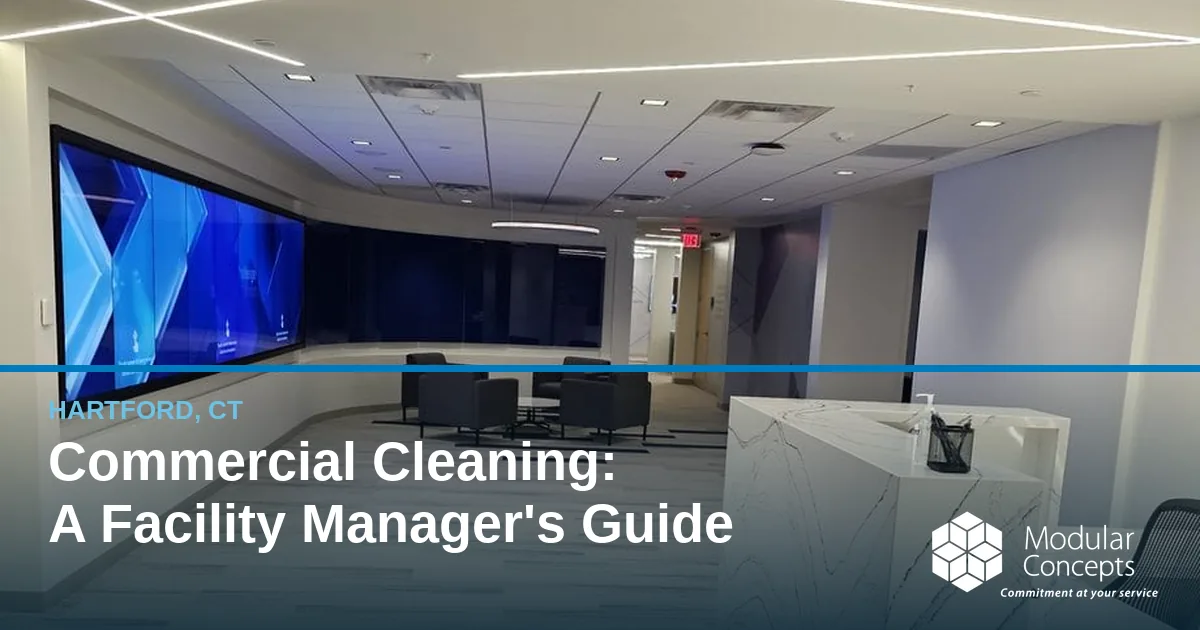
A senior operator’s room-by-room guide to what professionally cleaned offices actually look like across Massachusetts, Connecticut & Rhode Island.
Most office cleaning checklists you find online are written by marketing teams, not operators. They list “wipe surfaces” and “empty trash” without ever explaining what frequency matters, what gets missed by junior crews, or what a facility manager should actually inspect on a Monday morning. The result is a document that looks thorough on a website but tells you nothing useful when you walk a building at 7 AM.
This guide is different. It is built from how we actually run service across Massachusetts, Connecticut, and Rhode Island offices: which tasks run nightly, which run weekly, which get pushed to monthly or quarterly, and what separates a competent crew from a checklist-checker. If you operate or manage an office in MA, CT, or RI and you want to know whether your current vendor is delivering, or whether a new vendor’s proposal is realistic, this is the framework to measure against.
BSCAI member companies (the Building Service Contractors Association International) build their service plans around a daily, weekly, monthly, and quarterly cadence. The exact tasks vary by facility type, but the structure does not. We will walk through each layer, what belongs in each, where most vendors cut corners, and how to audit the work without becoming a full-time inspector.
Table of Contents
- What “Professionally Cleaned” Actually Means
- The Daily Office Cleaning Checklist
- The Weekly and Bi-Weekly Tasks
- The Monthly and Quarterly Deep Cleaning Layer
- Restroom Standards: The Single Most-Inspected Zone
- Kitchen and Break Room Protocols
- Workstations, Conference Rooms, and Common Areas
- Floor Care and High-Touch Surface Disinfection
- How to Audit Your Cleaner Against the Checklist
- The Bottom Line
1. What “Professionally Cleaned” Actually Means
Professionally cleaned does not mean “looks clean.” It means a facility has been cleaned to a documented, repeatable standard that holds up after twenty consecutive shifts, after a new hire takes over the route, and after a sick day pulls the lead off the floor. The visual result is downstream of the system. If the system is sloppy, the appearance will eventually slip too.
BSCAI verification, ISSA Cleaning Industry Management Standards (CIMS), and OSHA workplace safety standards are the three frameworks that real commercial cleaners operate inside. CIMS in particular defines five operational areas: quality systems, service delivery, human resources, health and safety, and management commitment. A vendor who can describe how they hit each of those in their daily work is operating differently than one who promises “attention to detail.”
The other piece most buyers underestimate is supervision. A nightly crew can be skilled and still drift without a supervisor walking the building at least weekly and flagging what slipped. Modular Concepts builds owner-level walkthroughs into every account because the owner has a different incentive than a route lead. He is not trying to hit a shift, he is trying to keep the client. That gap, between hitting the shift and keeping the client, is where most cleaning quality is won or lost.
2. The Daily Office Cleaning Checklist
A solid nightly route covers roughly twenty-five to thirty tasks across a 5,000 to 15,000 square foot office. The exact list varies, but the categories are constant: trash and recycling, restroom service, kitchen reset, hard-surface dusting, high-touch disinfection, vacuuming, spot-mopping, and lockup.
The real list looks closer to this. Empty every trash and recycling bin, replace liners, and stage spare liners so the morning crew is not improvising. Clean and disinfect every restroom fixture, partition, and high-touch point. Restock paper goods and soap to a per-stall standard, not “if it looks low.” Wipe and disinfect every kitchen and break room counter, sink, appliance exterior, microwave handle, and fridge handle. Reset chairs to the table and run a damp cloth over the table tops.
In office areas, dust horizontal surfaces below shoulder height, disinfect high-touch points (door handles, light switches, elevator buttons, keypads, copier touchscreens), spot-clean glass at entries and conference room doors, and vacuum all carpets plus walk-off mats. Lobbies and corridors get a damp mop or auto-scrubber pass. A correct daily route ends with lights down, doors locked, security armed, and a brief log of anything unusual: a leak, a spill, a left-on appliance. That log is the smallest piece of the job and one of the most diagnostic when you are auditing a vendor weeks later.
3. The Weekly and Bi-Weekly Tasks
Weekly work exists because daily-only routes ignore the surfaces and zones that do not need nightly attention but degrade fast if left for a month. The mistake we see in inherited accounts is a daily checklist that quietly absorbed weekly tasks, which means everything gets touched a little and nothing gets touched well.
A working weekly list includes detail-dusting at and above shoulder height (top edges of cubicle panels, picture frames, blinds, HVAC vents, monitor tops), edge-vacuuming carpet against baseboards where upright vacuums cannot reach, damp-wiping baseboards and door frames in high-traffic corridors, polishing stainless and chrome fixtures, and rotating cleaner-disinfectant cycles in restrooms so any surface that received daily neutral cleaner gets a weekly disinfectant pass. Conference room glass tables and whiteboard frames also live on the weekly list.
Bi-weekly is where you handle items that do not need every-week attention but show up on monthly inspections if skipped: interior glass partitions, vent registers, kitchen appliance interiors, and full-perimeter mop in restrooms behind toilets and along baseboards. Microwaves get a deeper wipe on this cadence, and refrigerators get a label-check and outdated-item pull on a documented schedule with the client’s approval. The exact split between weekly and bi-weekly depends on traffic, occupancy, and the facility’s standards. A 20,000 square foot life sciences office in Worcester has a different cadence than a 4,000 square foot non-profit in Providence. Both should have a documented one.
4. The Monthly and Quarterly Deep Cleaning Layer
Monthly and quarterly tasks are where most contracted accounts quietly underdeliver. The work is less visible day to day, the vendor knows the client is unlikely to inspect a vent register or behind a refrigerator, and the corners are easy to cut. Over six months, that compounds into a building that “still looks fine” but has accumulated a noticeable layer of neglect.
Monthly tasks include high-dusting (light fixtures, exit signs, tops of cabinets, anything above six feet that the weekly route does not cover), detailed vent and diffuser cleaning, polishing and buffing hard floors in lobbies and corridors, spot-extracting carpet stains, deep cleaning kitchen and break room appliance interiors, and full perimeter detail in restrooms. A facility manager should see physical evidence of these tasks in the work log, not just a checkbox.
Quarterly is where the heavier hard-floor and carpet work lives. Carpets get a hot-water extraction, not just a bonnet pass. VCT and tile floors get a strip-and-recoat or a deep scrub-and-recoat depending on the schedule established with the client. Glass gets a full interior detail including upper-frame and channel cleaning. HVAC return vents get a documented inspection. We also handle exterior pressure washing at entries, dumpster pads, and sidewalks on a quarterly cadence for clients across MA, CT, and RI where the seasonal grime cycle warrants it. A vendor proposal that lacks a defined monthly and quarterly schedule has not been written by an operator.
5. Restroom Standards: The Single Most-Inspected Zone
Restrooms are the single biggest issue in office cleaning, full stop. They are inspected by every employee multiple times a day, they generate more complaints than any other zone combined, and they reveal a cleaning operation’s discipline faster than any office area ever will. A facility where the restrooms are clean almost always has the rest of the building handled. The reverse is rarely true.
A correct daily restroom service is a sequence, not a list. Stock first (paper, soap, seat covers). Dust upper surfaces and partitions. Descend through the fixtures: dispensers, mirrors, sinks and counters, partitions, toilets and urinals, baseboards, and finally the floor (sweep, then mop with fresh solution, not the corridor mop water). The order matters because gravity carries contamination downward. Cleaning the floor first and then wiping the sink with the same crew member walking through means the floor is no longer clean.
Disinfection matters here too. Most general-purpose disinfectants need a documented contact time of three to ten minutes to actually kill what they claim to kill on the label. A crew member who sprays a toilet, immediately wipes it, and moves on has not disinfected anything. Modular’s protocol uses dwell-time-aware cleaning and color-coded microfiber to prevent cross-contamination (one color for toilets, a different for sinks, a third for counters). Paper goods are counted on a documented restock standard, not just checked. Restrooms across our MA, CT, and RI accounts follow this same standard regardless of facility size.
6. Kitchen and Break Room Protocols
Kitchens and break rooms are the second most-noticed zone in any office, particularly after the pandemic. They concentrate food residue, high-touch surfaces, shared equipment, and the kind of micro-mess (coffee grounds, fridge spills, microwave splatter) that nobody wants to clean but everyone notices. A clean break room signals the same thing a clean restroom does. Someone is paying attention.
The daily protocol covers the visible 80 percent. Counters wiped and disinfected. Sinks scrubbed and drains flushed with hot water. Dishwasher loaded or run. Microwave interior wiped. Refrigerator and microwave handles disinfected (some of the highest-touch points in the entire office). Trash and recycling pulled. Chairs reset. The break room table gets a damp wipe even if it looks clean. Coffee station drip trays get emptied. We replace the dish sponge if the client uses one because sponges harbor bacteria and should be sanitized or replaced regularly per FDA food contact guidance.
The deeper work lives on the weekly and monthly layer. Weekly: appliance exteriors get a detailed wipe, refrigerator seals get disinfected, cabinet faces below shoulder height get wiped, and recycling bins get sanitized. Monthly: refrigerator interior pull (with the client’s resident-food policy clearly established in writing beforehand), microwave deep-clean including splash guard and turntable, dishwasher self-clean cycle run, and coffee equipment descaled or wiped down per the manufacturer. The most common kitchen failure we see in inherited accounts is the microwave. Nightly crews wipe the door but skip the interior splatter zone, and within two weeks the visible result starts to embarrass the client.
7. Workstations, Conference Rooms, and Common Areas
The biggest myth in office cleaning is that workstations should be cleaned the same way restrooms are. They should not. Most companies have an employee-owned-zone policy that limits how deeply a cleaning crew interacts with personal desk surfaces, monitors, keyboards, and paperwork. A skilled crew respects that boundary. A careless one creates problems by moving objects, displacing paperwork, or wiping electronics with the wrong product.
The correct workstation protocol is to empty the desk-side bin, vacuum the floor around the workstation, and wipe the open horizontal surfaces the employee has clearly designated as wipeable (typically the desk perimeter, not the area covered with files and devices). Conference rooms get a deeper treatment because they are shared: chairs reset to the table, table top damp-wiped and disinfected, AV remote controls wiped (no liquid on touchscreens, just a damp microfiber), whiteboards wiped if they were left as scratch surfaces, and any used dishware or trash pulled. Glass conference walls get spot-cleaned at hand height.
Common areas (lobbies, corridors, elevators, stairwells) get a higher daily standard than the workstations behind them, because they are shared and inspected by visitors. Lobby glass cleaned to streak-free at eye level. Reception counter disinfected. Lobby seating wiped (fabric vacuumed weekly, leather wiped daily with appropriate cleaner). Elevator buttons, call buttons, and railings disinfected. Stairwell railings wiped. The visitor’s first thirty seconds in the building should not contain any surface that the cleaning team has not handled in the last shift. That is the operating standard.
8. Floor Care and High-Touch Surface Disinfection
Floors and high-touch points are the two surface categories that most strongly drive the perception of “clean,” and they are also where vendor performance varies most dramatically. A building can have spotless desks, restocked restrooms, and still feel dirty if the lobby floor is not properly maintained or the elevator buttons look sticky.
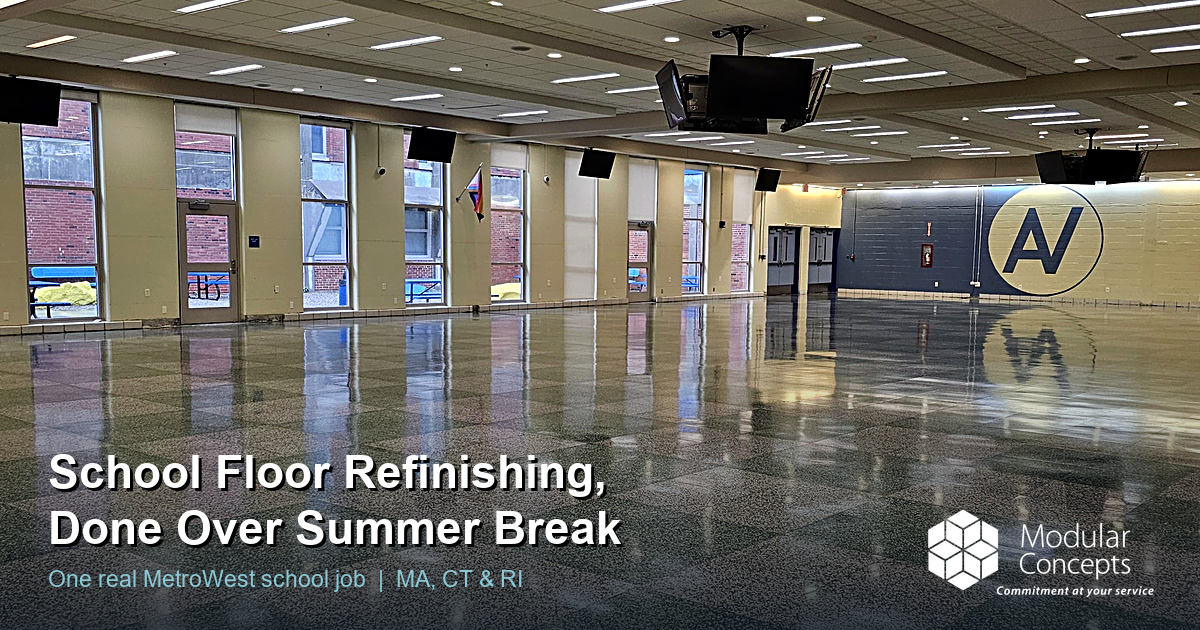
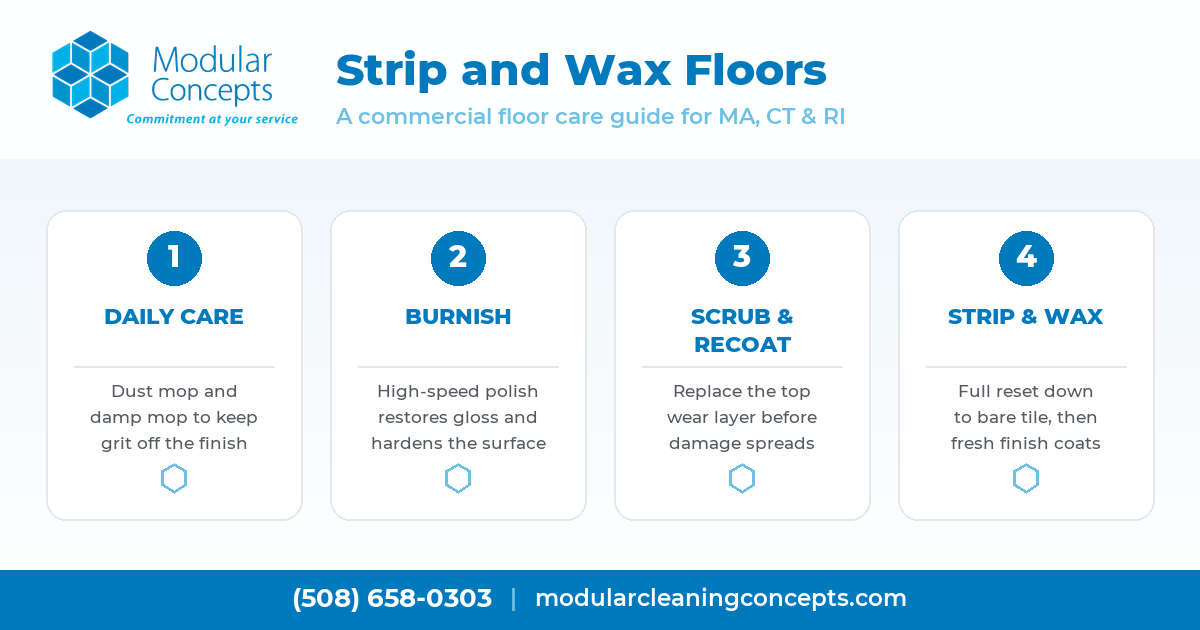
The floor care layer is structural. Walk-off mats inside every entry to capture moisture and grit. Daily vacuuming of all carpeted areas with a HEPA-equivalent vacuum (matters for indoor air quality and dust sensitivity in life sciences and medical office accounts). Daily damp-mop or auto-scrub on hard floors in lobbies, corridors, and restrooms. Weekly edge-vacuuming where uprights cannot reach. Monthly buffing and stain extraction. Quarterly hot-water carpet extraction. Annual or semi-annual strip and recoat on VCT and tile, scheduled around the client’s downtime. This is the standard for hard surfaces (VCT, polished concrete, tile, epoxy). Modular does not refinish wood floors; on accounts with hardwood, we coordinate with a specialty subcontractor for any restoration work.
High-touch surface disinfection is where post-pandemic expectations changed permanently. The current standard for office accounts is daily disinfection of door handles, light switches, elevator buttons, stair railings, shared keyboards or touchscreens, copier panels, kitchen appliance handles, restroom fixtures, and any other shared contact point identified during the walkthrough. We use EPA-registered disinfectants applied per label dwell time, not a quick spray-and-wipe. A crew that disinfects high-touch points correctly is the same crew that respects contact time in restrooms. The discipline transfers.
9. How to Audit Your Cleaner Against the Checklist
If you are reviewing a current cleaning vendor or evaluating a new one, these are the audit points that deserve scrutiny. None of them require a clipboard or a 6 AM building walk. They require asking specific questions and looking at specific places.
Ask for the written scope of work. A real vendor has a documented scope listing every task by frequency (daily, weekly, monthly, quarterly), zone by zone. If your current vendor cannot produce that document, the scope has been informal, and informal scopes drift. Ask for the inspection or supervisor walk-through cadence. A vendor that supervises weekly operates differently than one that supervises monthly or only when a complaint comes in. Ask whether the owner or a senior manager personally visits your account, and how often. At Modular Concepts, that is not a nice-to-have. The owner is on site at client locations as part of the standard QA rhythm.
Then check the physical evidence. Top edges of cubicle panels and picture frames (weekly task). Tops of cabinets and exit signs (monthly). Behind the toilet and along restroom baseboards (weekly or bi-weekly). Inside the microwave (monthly). HVAC vent diffusers (monthly to quarterly). The dust at these specific locations tells you exactly which frequency tier is being skipped. The other tell is the log. A real vendor leaves a nightly note (or files one in a portal) summarizing what happened that shift. If your account has no log and no recent supervisor visit, your vendor is operating on autopilot. Autopilot has a half-life.
10. The Bottom Line
A professionally cleaned office is the result of a documented daily, weekly, monthly, and quarterly system run by a crew that is supervised, a supervisor that is supported, and an owner that shows up. The visible result, that walk-in-Monday-morning feeling that the building was actually handled, is downstream of all of that.
If you operate an office facility in Massachusetts, Connecticut, or Rhode Island and you want a cleaning partner that runs a real checklist (not a marketing one), Modular Concepts can help. We are BSCAI verified, we work without long-term contracts (3-month minimum, then month-to-month with 30-day notice), and our owner is on site at client locations regularly because that is how good work gets done.
Reach us at (508) 658-0303 for a no-obligation walkthrough and quote. We will tell you honestly what your facility needs, what it should cost, and where your current setup is delivering versus where it is drifting.