What facility managers & operations leads across MA, CT & RI need to know.
Warehouse cleaning covers floor care at industrial scale, high dusting of racking and overhead fixtures, dock and entrance upkeep, and daily janitorial service for the offices, restrooms, and break rooms inside the building. In an active distribution facility, traffic zones need daily attention while racking and overhead surfaces run on a quarterly cycle. Done right, it is a safety and compliance program, not housekeeping.
A warehouse does not get judged on how it looks. It gets judged on whether product moves, whether people go home uninjured, and whether the next audit passes. Cleaning touches all three, which is why industrial facilities treat it differently than office buildings do. This guide from Modular Concepts, a commercial cleaning and facility maintenance company based in Marlborough, Massachusetts, is written for the people who run distribution centers, manufacturing storage, and fulfillment operations across Massachusetts, Connecticut, and Rhode Island.
The need is regional as much as operational. Distribution activity keeps growing along the I-84 and I-91 corridors in Connecticut, the I-495 belt in Massachusetts, and the Providence metro in Rhode Island. Most of what gets published about warehouse cleaning is written by equipment manufacturers selling scrubbers. Very little of it is written for the facility manager who owns the outcome.
This guide covers what the regulations actually require, where dust and debris create real risk, how the often-forgotten office zones inside industrial buildings should be handled, and how often each zone of a warehouse needs attention.
Table of Contents
- 1. Cleaning Is a Safety Program, Not a Chore
- 2. The Regulatory Framework: OSHA Housekeeping and Combustible Dust
- 3. Floors: Protecting the Slab That Runs the Operation
- 4. High Dusting: Racking, Beams, Vents, and Fixtures
- 5. Docks and Entrances: Where New England Weather Gets In
- 6. The Forgotten Zones: Offices, Restrooms, and Break Rooms
- 7. Special Cases: Food-Grade, Manufacturing, and Multi-Tenant Buildings
- 8. How Often Should a Warehouse Be Cleaned?
- 9. How to Vet an Industrial Cleaning Vendor
- 10. The Bottom Line
- Frequently Asked Questions
1. Cleaning Is a Safety Program, Not a Chore
Warehousing is one of the more dangerous places to work in America, and the floor is where much of the danger lives. Bureau of Labor Statistics data for 2023 puts the warehousing and storage industry at 4.8 nonfatal injuries per 100 full-time workers. The private-sector average is 2.4. A warehouse worker is roughly twice as likely to be hurt on the job as the average American worker.
A large share of those injuries trace back to conditions a cleaning program controls. Slips on spilled liquids and tracked-in weather. Trips over debris, stray stretch wrap, and broken pallet fragments in aisles. Strains from working around clutter instead of through clear lanes. Forklift operators depend on visible floor markings and clean sight lines, and both disappear under grime and stacked debris.
That is the correct frame for everything else in this guide. In an office, cleaning is mostly about presentation and health. In a warehouse, cleaning is a layer of the safety program, sitting alongside training, equipment maintenance, and traffic management. Facilities that treat it that way schedule it, zone it, and document it. Facilities that treat it as an afterthought find out during an incident investigation exactly how much the difference matters.
2. The Regulatory Framework: OSHA Housekeeping and Combustible Dust
Warehouse cleanliness is not optional under federal rules. OSHA’s walking-working surfaces standard, 29 CFR 1910.22, requires workplaces to be kept clean, orderly, and sanitary, with floors free of hazards like debris and spills. A second standard, 1910.176(c), requires storage areas to be kept free of accumulations that create tripping, fire, explosion, or pest hazards. Inspectors cite both regularly, and housekeeping citations are among the easiest for OSHA to document because the evidence is sitting on the floor.
Dust deserves its own paragraph. Fine dust from cardboard, paper, wood pallets, grain, sugar, and many powders is combustible when it accumulates and disperses. The U.S. Chemical Safety Board counted 119 worker deaths and 718 injuries from combustible dust incidents between 1980 and 2005, and OSHA runs a national emphasis program on the hazard. In 2025, the National Fire Protection Association consolidated its dust standards into NFPA 660, which ties dust safety directly to housekeeping frequency. If your operation generates dust, your cleaning schedule is part of your fire protection plan.
None of this requires panic. It requires a documented program: which zones get cleaned, how often, by whom, and where the log lives. When an inspector, insurer, or auditor asks, the answer should be a schedule and a record, not a shrug.
3. Floors: Protecting the Slab That Runs the Operation
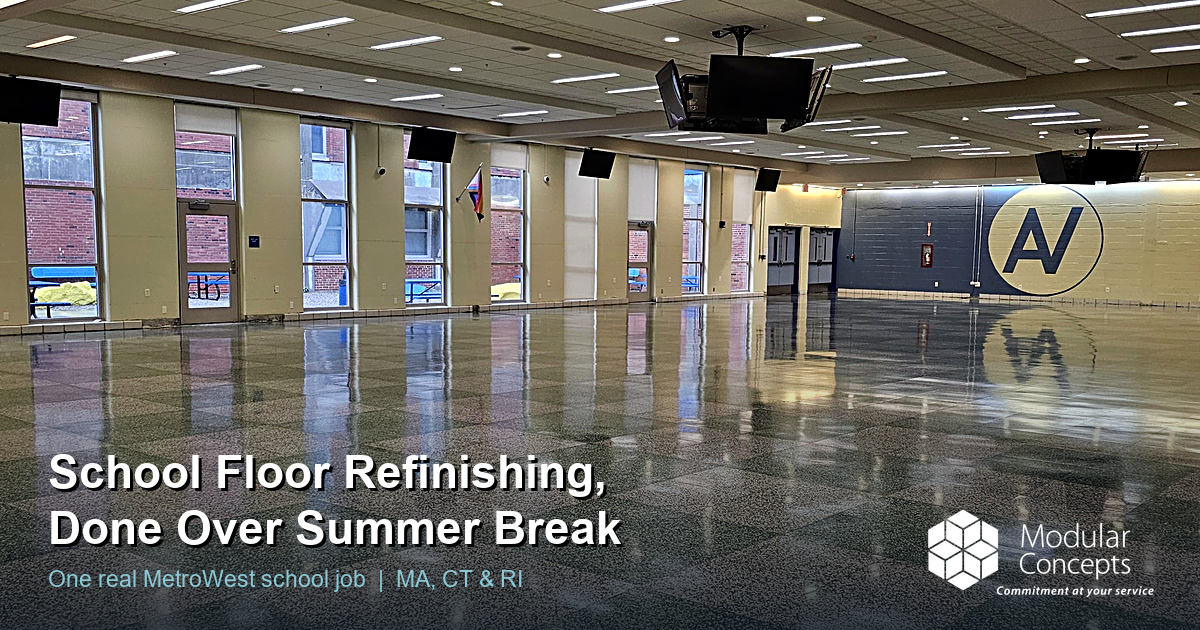
A warehouse floor is a working asset. Every pick path, forklift lane, and staging area depends on it, and grit is its enemy. Dust and debris act like sandpaper under wheels and foot traffic, wearing the surface and dulling the line striping that keeps pedestrians and powered equipment separated. Regular sweeping and machine scrubbing remove the abrasive load before it does damage.
Method matters as much as frequency. Sealed concrete should be cleaned with pH-neutral products, because harsh alkaline chemistry can attack the sealer and leave the slab worse than before. Auto-scrubbers and vacuum-assisted sweepers capture fine dust instead of throwing it back into the air the way dry brooms do. Spill response needs a defined procedure and absorbents on hand, not a mop that spreads the slick across a wider area.
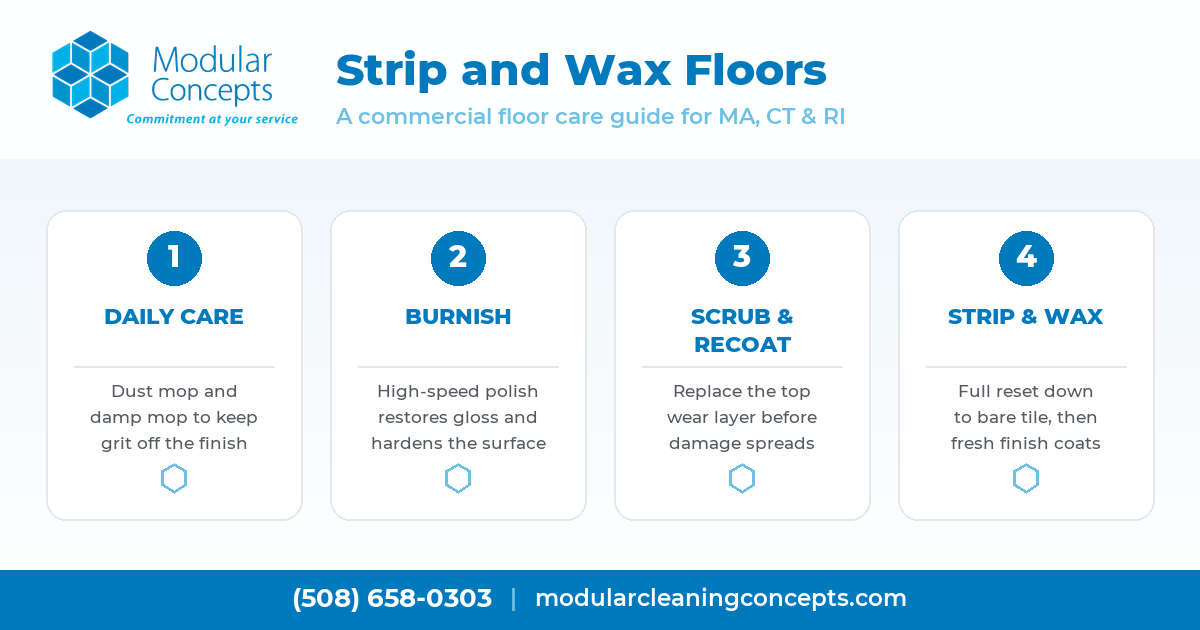
Two honest boundaries are worth stating. Cleaning and maintaining a sealed slab is different from grinding, resurfacing, or polishing it, which is specialty concrete contractor work. And the office areas inside the facility usually run on VCT or tile, which follow their own care cycle of routine mopping plus periodic strip and wax. A good industrial cleaning partner handles both surfaces and knows exactly where one trade ends and the other begins.
4. High Dusting: Racking, Beams, Vents, and Fixtures
Look up in any warehouse that has skipped high dusting for a year and you will see the problem: a gray blanket on every beam, sprinkler pipe, light fixture, and rack upright. That accumulation is not cosmetic. It is fuel load in a fire, a contamination source raining fine dust onto inventory below, and a maintenance drag on the building’s systems.
The operational costs are specific. Dust-coated light fixtures dim the very aisles where forklifts and pickers need visibility. Clogged HVAC grilles and exhaust vents make air handlers work harder and spread dust farther. Dust on sprinkler heads and piping is a housekeeping item fire inspectors notice, and heavy accumulation on rack tops ends up on cartons, which becomes a customer complaint when the carton reaches a receiving dock somewhere else.
High dusting is scheduled work, not something a night crew improvises. It takes lifts or extension equipment, crews trained to work above racking safely, and coordination with operations so aisles can be closed in sections without stopping the building. This is also where vendor capability shows quickly. Ask any prospective cleaning partner how they reach a 30-foot beam, what they put down to protect product below, and how they sequence aisle closures around your shifts. Vague answers mean the tops of your racks will stay gray.
5. Docks and Entrances: Where New England Weather Gets In
Every warehouse fights a two-front war at its doors. Dock doors open dozens of times a day to trailers carrying road grime, and personnel doors carry in whatever the parking lot holds. In Massachusetts, Connecticut, and Rhode Island, that means five months of salt, sand, and slush every winter, followed by pollen in spring and wet leaves in fall. The weather does not stay outside. It rides in on every pallet jack and boot.
Winter salt is the expensive one. Salt residue whitens and degrades floor finishes, corrodes dock equipment, and turns to slick film the moment it meets moisture. The defense is layered: scraper and walk-off matting at every personnel entrance, aggressive daily attention to dock aprons and staging areas through the winter, and prompt scrubbing runs that lift salt before it grinds in. Facilities that skip this spend spring repairing floors and replacing mats they could have preserved.
Docks also carry a pest dimension. Debris in dock pits, food wrappers near break doors, and spilled product at staging areas are standing invitations to rodents and insects, and dock seals only work when the area around them is kept clear. A cleaning scope that ends ten feet inside the building misses the zone where most contamination actually enters. Make sure dock plates, pits, and aprons are named in the scope, not assumed.
6. The Forgotten Zones: Offices, Restrooms, and Break Rooms
Almost every warehouse contains a small office building nobody talks about. Front offices, dispatch desks, restrooms, locker areas, and break rooms might be five percent of the square footage, but they serve every person in the building across every shift. They are also where industrial cleaning programs most often fail, because the scope was written for the racks and the slab.
Restrooms in an industrial facility take more punishment than office restrooms. They serve more people, more shifts, and dirtier work. They need daily service at minimum: fixtures cleaned and disinfected, consumables restocked, floors mopped, and drains maintained. Break rooms concentrate food waste, which makes them the highest pest-risk zone in the building after the docks. Tables, counters, appliances, and high-touch surfaces like handles and switches deserve daily disinfection, and trash needs to leave the building every day, not when someone remembers.
There is a labor-market reason to care beyond hygiene. Warehouse operators across Massachusetts, Connecticut, and Rhode Island compete hard for hourly workers, and the condition of the break room and restrooms tells employees exactly how much the company values them. A spotless office suite next to a grim break room sends a message every shift reads. Facilities that keep the people-zones clean hold onto people longer, and turnover is far more expensive than janitorial service.
7. Special Cases: Food-Grade, Manufacturing, and Multi-Tenant Buildings
Not every warehouse is a rack farm for durable goods. Food and beverage distribution operates under FDA rules: the Food Safety Modernization Act’s preventive controls regulation, 21 CFR Part 117, holds food warehouses to current good manufacturing practices, and sanitation is written into them. Third-party audit schemes ask for cleaning schedules, product-safe chemicals, and completed logs as evidence. If your building holds food, your cleaning vendor’s documentation is part of your audit file, so ask to see what their logs look like before you hire them.
Manufacturing storage brings different soil. Metal fines, machining oils, and process dust migrate from production into adjacent storage and staging areas, and they need degreasing chemistry and methods that a distribution scope never uses. The cleaning plan should follow the soil, not the floor plan, with transition zones between production and storage getting the heaviest attention.
Multi-tenant flex and light industrial buildings add an ownership question: the landlord typically maintains common areas while each tenant owns its own suite, and the lease decides where the line sits. Gaps between the two scopes are where problems live, usually at shared docks and shared restrooms. Whoever manages the building should walk both scopes side by side once and make sure every zone has exactly one owner.
8. How Often Should a Warehouse Be Cleaned?
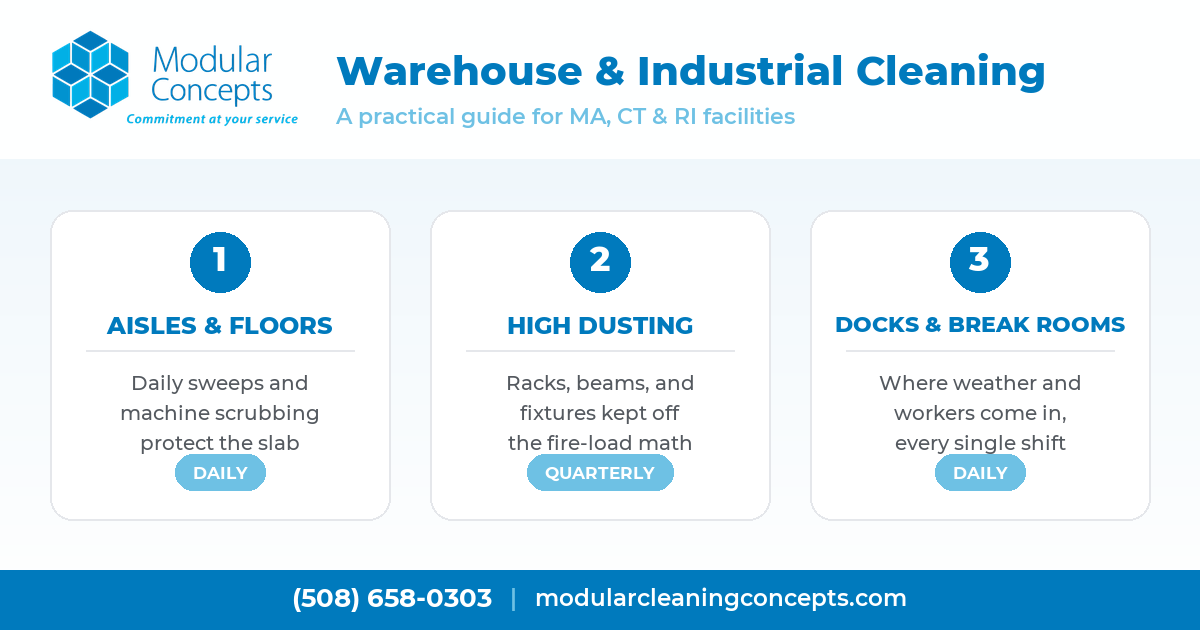
Frequency follows traffic and risk, not the calendar alone. An active distribution facility needs daily attention in its traffic zones and people-zones, weekly coverage of lower-traffic areas, and a monthly-to-quarterly cycle for deep work like machine scrubbing and high dusting. The table below is the zone schedule most active facilities land on.
| Zone | Frequency | Why |
|---|---|---|
| Main aisles and pick paths | Daily | Slip, trip, and forklift sight-line safety |
| Docks, aprons, and entrances | Daily (stepped up in winter) | Weather, salt, debris, and pest entry control |
| Restrooms and break rooms | Daily | Hygiene, pest prevention, and employee morale |
| Office areas and low-traffic aisles | 2 to 3 times per week | Steady soil load, lower risk |
| Full-slab machine scrub | Monthly to quarterly | Finish protection and line-marking visibility |
| High dusting (racks, beams, vents, fixtures) | Quarterly | Fire load, lighting output, product protection |
Two adjustments move the schedule. Dust-generating operations, corrugate-heavy fulfillment, woodworking, or anything under NFPA 660’s scope should shorten the high-dusting cycle, because dust accumulation is a fire-protection issue before it is a cleanliness issue. Seasonal load matters too: dock zones and entrances in this region need their winter frequency stepped up from roughly November through March, then relaxed once the salt season ends. Set the schedule by zone, write it down, and revisit it twice a year.
9. How to Vet an Industrial Cleaning Vendor
Warehouse work filters out cleaning companies quickly, and the filter questions are specific. Ask what equipment they bring: an office vendor with upright vacuums cannot maintain 100,000 square feet of slab, so listen for auto-scrubbers, sweepers, and lift access for high work. Ask how crews are trained for industrial environments: pedestrian-forklift separation, staying out of active pick lanes, chemical handling, and what personal protective equipment their people wear. Ask for proof of insurance and confirm every person entering the building is background-checked and covered.
Then test how they scope. A serious industrial vendor insists on walking the building before quoting, writes the scope zone by zone with a frequency for each line, and names the dock aprons, high dusting, and break rooms explicitly instead of hiding behind a phrase like general cleaning. They should also explain how quality gets verified after month one, because month one is never the problem.
This is how Modular Concepts approaches warehouse and industrial work across Massachusetts, Connecticut, and Rhode Island. We run a team of roughly 100 professionals, we are a BSCAI member, and we work without long-term contracts: service runs month to month after a three-month start, so the work has to stay good for the account to stay ours. The owner is involved in quality control through site visits, which is where scope drift gets caught. And the scope we quote comes from a walkthrough of your building, never from a square-footage guess over the phone.
10. The Bottom Line
Warehouse cleaning is a safety program wearing work clothes. It keeps the floor that runs your operation intact, keeps dust off the beams and out of the fire-load math, keeps New England winters at the dock door, and keeps the restrooms and break rooms your people judge you by in shape across every shift. The regulations already require most of it. The operational payoff covers the rest.
If you run a distribution center, manufacturing storage, fulfillment operation, or flex building in Massachusetts, Connecticut, or Rhode Island, Modular Concepts can build the zone-by-zone program with you. We are a BSCAI member, we work without long-term contracts, and our owner stays involved in quality control because industrial accounts are kept, not won.
Reach us at (508) 658-0303 for a no-obligation walkthrough and quote. We will tell you honestly what your facility needs, what it should cost, and which zones deserve the most attention first.
Frequently Asked Questions
How often should a warehouse be cleaned?
Traffic zones and people-zones need daily attention: main aisles, dock aprons, restrooms, and break rooms. Lower-traffic storage aisles and office areas typically run two or three times per week. Deep work runs on a longer cycle, with machine scrubbing of the full slab monthly to quarterly and high dusting of racking, beams, and fixtures quarterly. Dust-generating operations should shorten those cycles, because accumulated dust is a fire-protection issue under NFPA 660.
What does warehouse cleaning include?
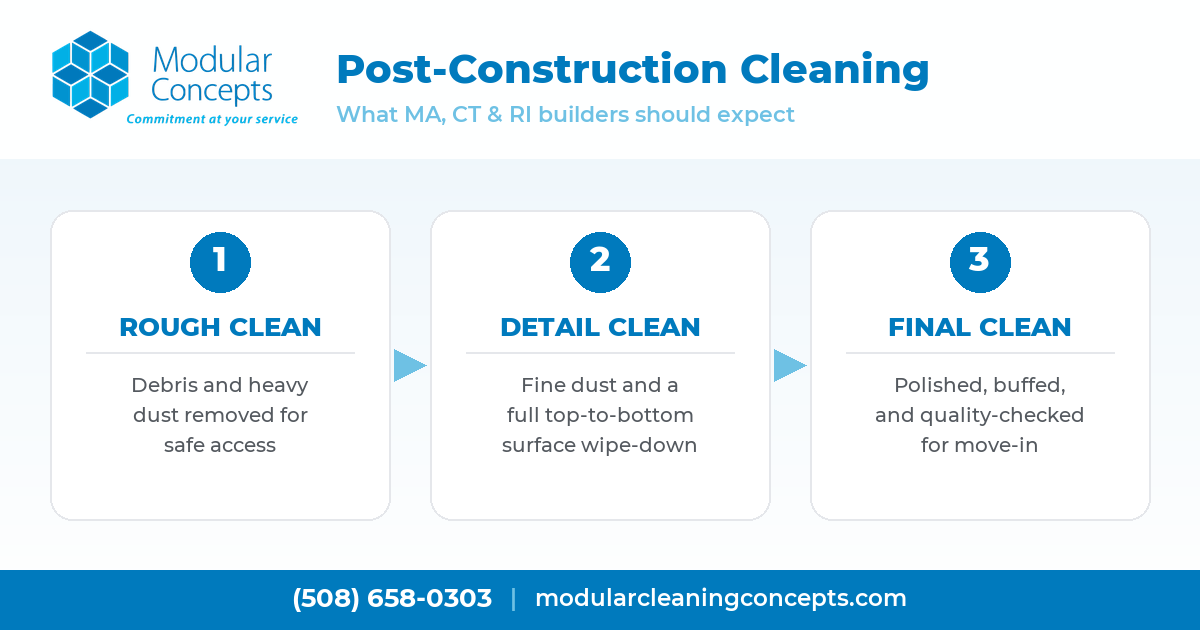
A complete scope covers floor sweeping and machine scrubbing, high dusting of racking, beams, vents, and light fixtures, dock and entrance upkeep including salt and debris control, spill response, trash and debris removal, and full janitorial service for the offices, restrooms, locker areas, and break rooms inside the building. Specialty work like exterior pressure washing or post-construction cleanup is scoped separately.
What is combustible dust, and why does it matter in a warehouse?
Fine particles from cardboard, paper, wood, grain, sugar, and many powders can ignite or explode when enough accumulates and disperses in the air. The U.S. Chemical Safety Board counted 119 worker deaths from combustible dust incidents between 1980 and 2005, and NFPA 660, the standard consolidated in 2025, ties dust safety directly to housekeeping. If your operation generates dust, the cleaning schedule is part of your fire protection plan, not just appearance.
Is warehouse cleaning an OSHA requirement?
Yes, in substance. OSHA’s walking-working surfaces standard, 29 CFR 1910.22, requires workplaces kept clean, orderly, and sanitary with floors free of hazards, and 29 CFR 1910.176(c) requires storage areas kept free of accumulations that create tripping, fire, explosion, or pest hazards. Housekeeping citations are common because they are easy to document. A written cleaning schedule with completed logs is the practical evidence of compliance.
Do food distribution warehouses have special cleaning requirements?
Yes. Food warehouses fall under the FDA’s preventive controls regulation, 21 CFR Part 117, which builds sanitation into current good manufacturing practices. In practice that means documented cleaning schedules, chemicals appropriate for food-adjacent areas, pest-conscious dock and break-room routines, and logs your auditors can inspect. Ask any cleaning vendor serving a food facility to show how they document their work before you hire them.
Does Modular Concepts clean warehouses in Connecticut and Rhode Island?
Yes. Modular Concepts serves distribution centers, manufacturing storage, fulfillment operations, and light industrial buildings across Massachusetts, Connecticut, and Rhode Island, including the I-84 and I-91 corridors in Connecticut and the Providence area in Rhode Island. Service is scoped from a free walkthrough of the building, runs without long-term contracts, and covers both the industrial zones and the offices, restrooms, and break rooms inside. Call (508) 658-0303 to schedule.