Commercial cleaning and facility maintenance for Massachusetts, Connecticut, and Rhode IslandPhone answered 24/7 · modular@cleanwith.us
Warehouse cleaning is the scheduled care of the floor your goods move across: open slab, staging lanes, racking aisles, and the docks. Modular Concepts provides warehouse cleaning services across Massachusetts, Connecticut, and Rhode Island from Marlborough. Each building gets a written plan by zone, timed to the hours your forklifts park. Service is month to month, with no long-term contract.




 ISSA MemberBSC Council
 BSCAI Verified MemberBuilding Service Contractors Assn.
 Marlborough Regional Chamberof Commerce, member
 ChamberofCommerce.comVerified Member
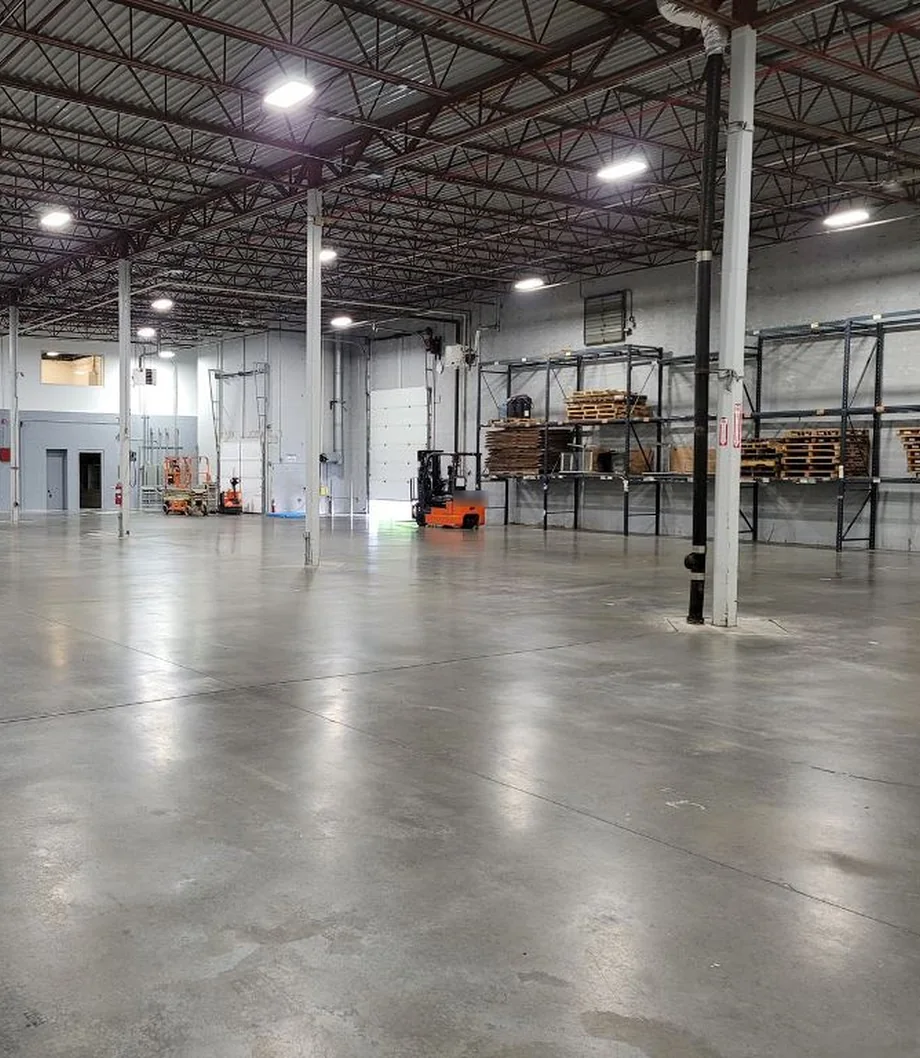
Warehouse cleaning includes the floor work that keeps goods and people moving safely. Crews sweep the open slab and staging lanes, then machine scrub them. Racking aisles get a sweep on a rotation. Dock floors get the most passes, because every trailer that backs in drags grit through the door.
Federal rules point the same way. OSHA's walking-working surfaces rule calls for clean, orderly passageways and storerooms. Workroom floors must be kept clean and, where feasible, dry (29 CFR 1910.22). Loose shrink wrap, pallet splinters, and dust on a forklift lane work against that.
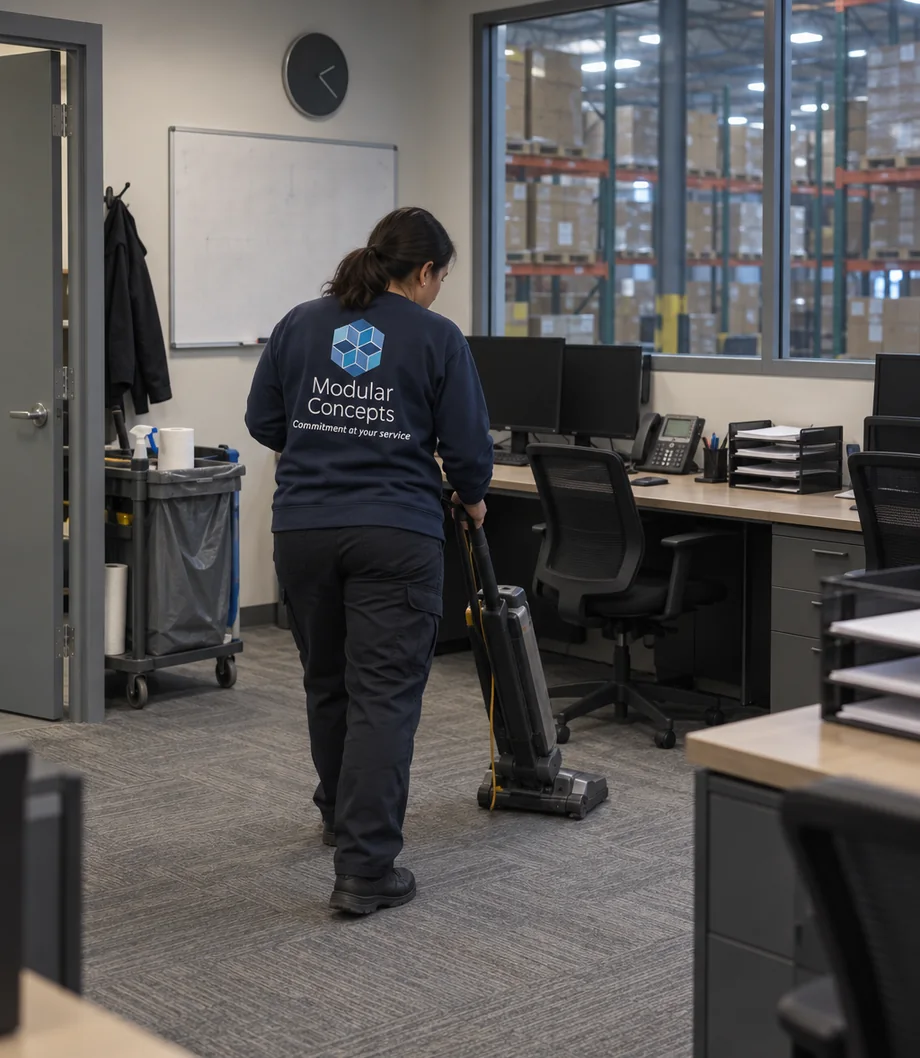
Break rooms, restrooms, and the dispatch office run on a separate warehouse janitorial program, and both can share one quote. The floor plan sets what gets scrubbed, how often, and how the work fits around your shifts.
| Zone | Every scheduled visit | On a rotation or as a project |
|---|---|---|
| Open slab and staging lanes | Swept, debris picked up, dried spills spot scrubbed | Full machine scrub of the released lanes, a deep scrub of the whole slab |
| Racking aisles | Main aisles swept and cleared of loose wrap | Each aisle swept end to end on its turn in the rotation |
| Dock doors and bays | Floors inside the doors swept, thresholds cleared | Machine scrub of the dock floor, pressure washing of the paved area outside |
| Office and break room floors | Covered by the janitorial program | Scrub, recoat, and strip and wax for VCT |
On a common starting schedule for a busy distribution warehouse, crews clean dock floors and staging lanes every visit, often five nights a week. Main aisles get a sweep several times a week and a scrub weekly. Racking aisles rotate weekly or every other week, and the whole slab gets a deep scrub about once a quarter. The walkthrough sets the real numbers for your building.
Traffic sets the schedule more than size does. A cross-dock that ships all day wears its lanes faster than a storage hall that turns stock once a month. Modular adjusts each zone's frequency as your volume shifts.
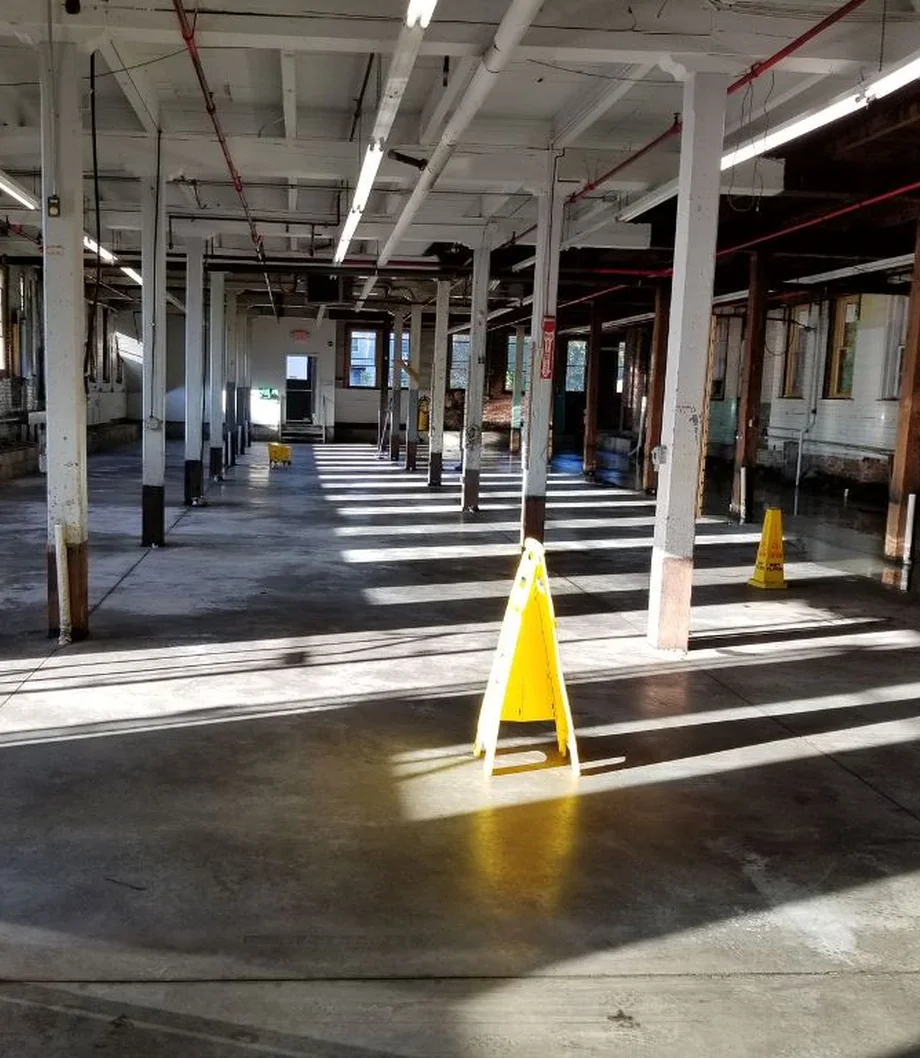
New England winters change the plan. Road salt and sand ride in on tires and boots from about December through March, so dock lanes get extra passes. Spring is a common time to wash the paved areas outside.
Peak shipping weeks add cardboard, wrap, and forklift traffic. Because service is month to month, you can add passes for peak and drop them after, with no contract to reopen.
| Zone | Typical frequencyOne bar: about once a year. Five: every visit. | What changes it |
|---|---|---|
| Dock floors and staging lanes | Every visit | Trailer count, weather, and road salt |
| Main aisles and crosswalks | Swept several times a week, scrubbed weekly | Forklift traffic and spills |
| Racking aisles | Weekly or every other week, on a rotation | How fast stock turns in each aisle |
| Full-slab deep scrub | About once a quarter | Tire marks and ground-in dust |
| Paved areas outside the docks | Once or twice a year, often in spring | Winter salt, sand, and spills |
| Office and break room VCT | Strip and wax once or twice a year | Foot traffic and the scrub rotation |
Operators choose Modular Concepts for commercial warehouse cleaning because the floor plan is written zone by zone and service runs month to month. Customers stay about eight years on average, because of the quality of the service, not a contract. Modular is a family-owned company operating since 2008, based in Marlborough.
Modular's floor care program covers 750,000+ square feet a year, including carpet cleaning. On a warehouse quote, the slab, any epoxy-coated rooms, and the office VCT each get their own method. Concrete polishing is not offered.
Day, evening, and overnight crews are available. The plan names the hours each zone is released, so machines only run in lanes your shift lead has cleared.
Every zone, task, and frequency is written down before the first visit. When racking moves or a dock door is added, the plan and the price change in writing, with no term to unwind.
Everyone placed on site is background-checked and has basic in-house safety training. Your rules for vests, footwear, and crosswalks go on the plan before the first visit.
Modular carries $2,000,000 in general liability through Northeast Insurance and workers' compensation through Travelers. Each address gets its own certificate of insurance.
We run the entire operation from start to finish, with periodic site inspections. A combination of employees and subcontractors does the work, all managed directly by Modular. One contact handles the account.
Four services add on to warehouse cleaning most often. Janitorial care covers the people spaces, and floor care covers office and break room tile. Pressure washing works outside the docks, and a one-time cleanup follows construction or a racking install. Modular prices each one on its own line, so the floor plan stays the same when one is added or dropped.
The floor plan covers the slab. The rooms people use each shift need a different list: restrooms restocked, break room tables wiped, trash out, and dispatch offices vacuumed. The janitorial program covers them on the same visits, quoted as its own line and timed to your shift changes.
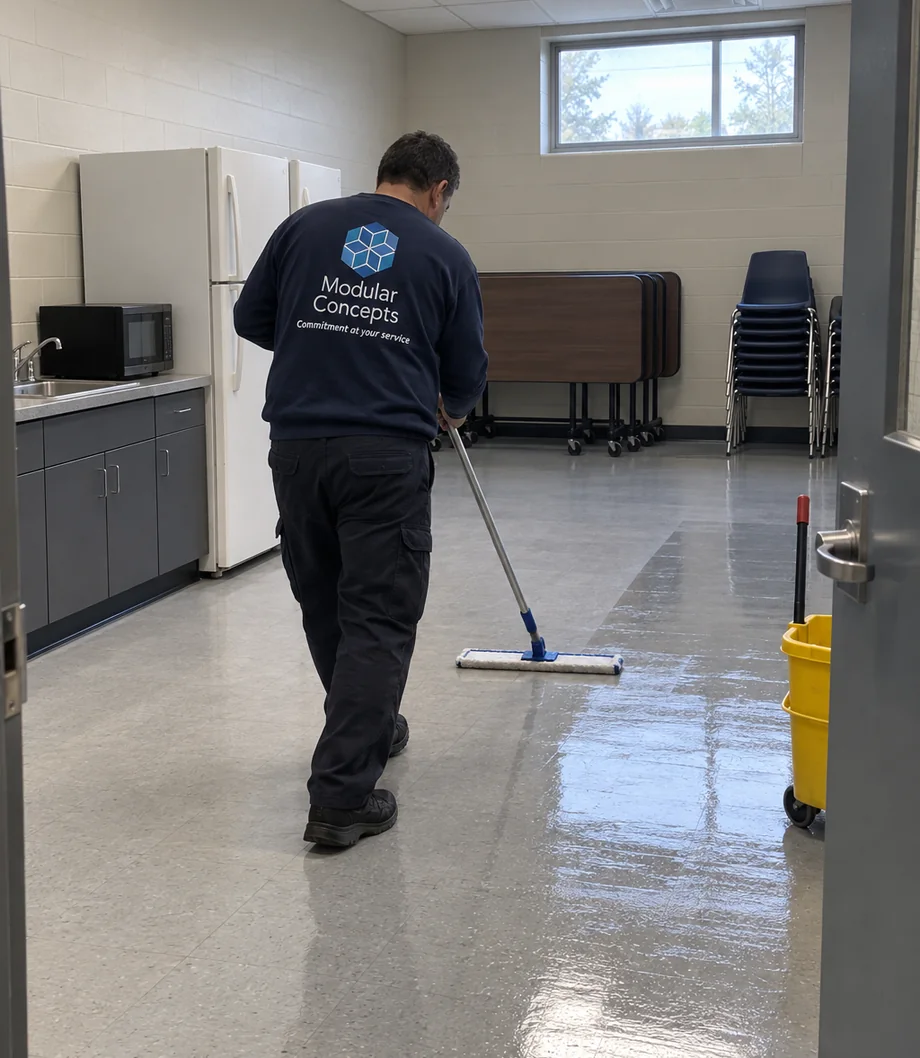
Office and break room VCT wears differently from the slab. It carries a finish, and dock grit on boots cuts through it. Modular scrubs and recoats that tile on a rotation, then strips and waxes it when the finish wears through. Hard surfaces only, with no wood refinishing.
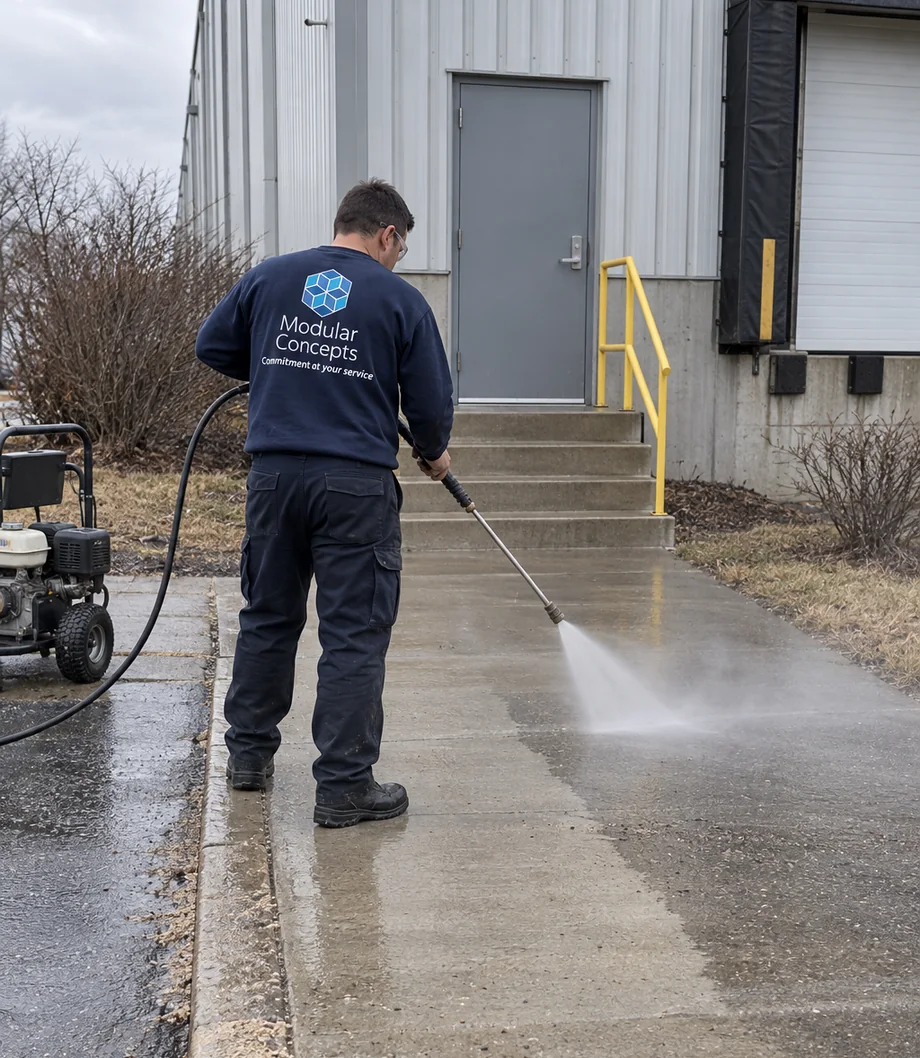
Much of the grit on a dock floor starts outside. Pressure washing lifts salt, sand, and grime from the employee walks, the dumpster pad, and the paved area by the doors. Many sites book it in spring, after salt season. Each wash is quoted per visit and booked around your trailer schedule.
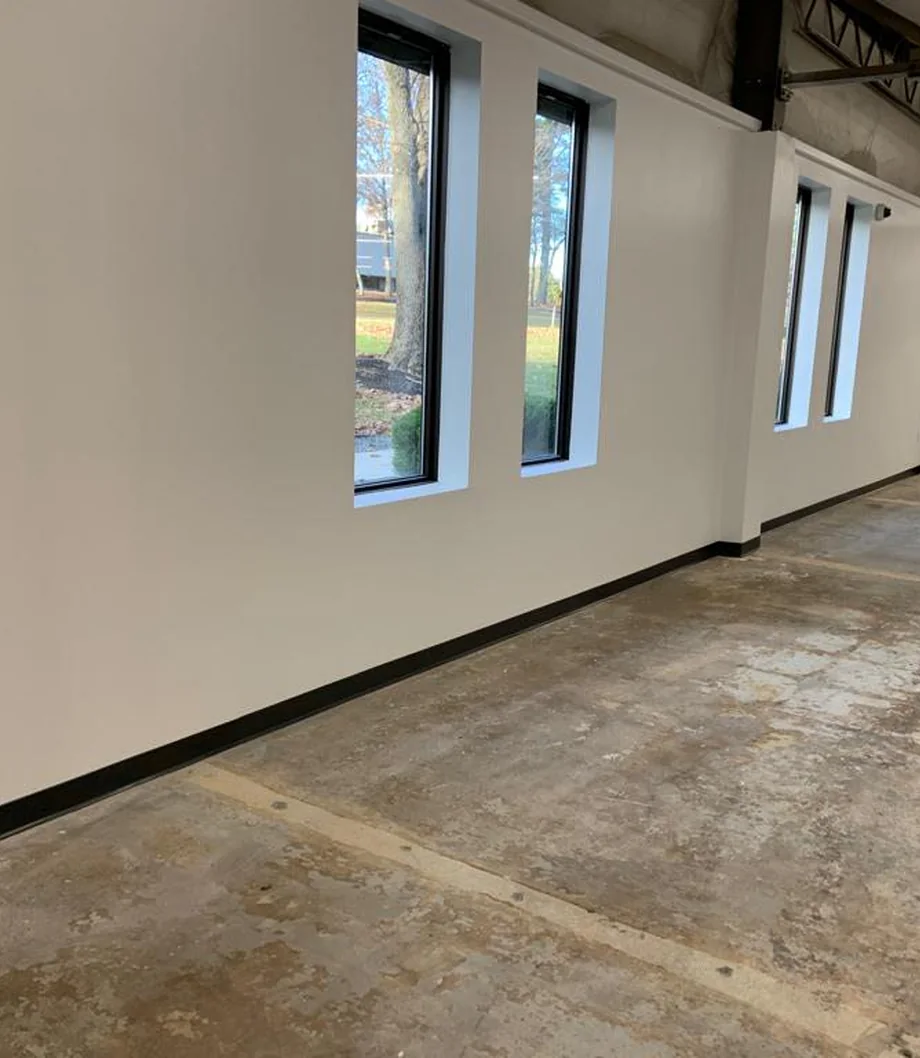
A new building, a fit-out, or a racking install leaves dust, drill shavings, and packaging on the slab. Modular cleans the space before stock arrives, so the recurring plan starts from a clean floor. The cleanup is quoted as one project, separate from the monthly plan.
A warehouse cleaning plan with Modular is set up in five steps. It starts with a free walk of about an hour with your operations lead. Each zone is mapped with its floor type and release hours. A written plan follows, then a baseline clean, and the plan is reviewed when your volume changes.
We walk the slab, racking aisles, staging lanes, and each dock door with your operations lead. We note the floor type, any coating, the drains, and where dust and wrap collect.
Each zone gets a line with its tasks and frequency. Your lead names the hours each lane is clear of forklifts, and the schedule follows those windows.
Vest and footwear rules, crosswalks, badge steps, and the areas crews never enter go on the plan. Modular issues a certificate of insurance for the address before the first visit.
The first visits bring each zone to a clean starting point: debris out, edges and column bases detailed, and the slab scrubbed. Wet lanes stay signed until they dry.
Before peak season, after a racking change, or when a dock door is added, we walk the floor with you again. Zones and frequency change in writing, month to month.
Warehouse cleaning cost depends most on how much floor is machine scrubbed and how often. That is why Modular prices each building after a walk of the floor. Cleaning companies quote warehouses by the square foot, by the hour, or as a flat monthly price. Modular quotes one monthly price built from the zones in scope, the frequency of each, and the tasks per visit. Project work sits on its own lines.
About an hour with your operations lead. We walk the slab, aisles, and docks, note the floor types and coatings, and ask which hours each zone can be released.
Modular prices only the zones you choose. A storage hall that barely moves can stay off the plan, and a new mezzanine or expansion joins later on its own line.
Scrub frequency moves the price most. Dock lanes may run every visit while quiet racking aisles run every other week. Fewer passes in a slow zone lower the monthly number.
The task follows the zone. A dock lane gets a sweep, debris pickup, and a scrub. A racking aisle may only need a sweep and a check for loose wrap.
Zones, frequency, and tasks become lines on one page. Janitorial, floor care, and pressure washing sit on their own lines, so you can see what each one costs.
Steps advance on their own. Tap a hex to hold it.
When you compare quotes, ask each company which zones it scrubs and how often. A price that covers the dock lanes weekly is not the same as one that covers them every visit.
Modular Concepts provides warehouse cleaning in six kinds of buildings across Massachusetts, Connecticut, and Rhode Island. Pick one to see which zones the plan covers there and to reach that industry's page. The plant storage example comes from a Google review, shown in full further down.
Dock doors on one or both long walls, racking in the middle, and staging lanes between them. The dock lanes and staging floor get the most passes, and racking aisles take turns on a rotation.
Warehouse janitorial servicesPick and pack floors shed cardboard, tape, and wrap all shift. The pack lanes and the floor around each station need the most sweeping. Conveyors and pick modules stay outside the scope.
Fulfillment and distributionThe storage hall and aisles beside a plant or machine shop, cleaned on the warehouse schedule. Production equipment stays with your team, and the plant's offices follow the industrial program.
Several units under one roof, each with a front office and a warehouse bay. Each bay floor joins on its own line, so one tenant can start while the next unit waits. A unit fitted out as a lab follows the laboratory program instead.
Commercial building cleaningA new building, an expansion, or a racking install leaves dust and debris across the slab. Crews clean the floor before stock arrives, then the recurring plan begins.
Construction site cleanupDock doors line both long walls, and freight crosses the floor from door to door with little time in racking. Nearly the whole floor is dock lanes and staging, so most of it sits on the every-visit line.
Warehouse and logistics cleaningNot in scope: retail stockrooms and sales floors, and restaurant dining rooms and restrooms. Moving stock, pallets, and equipment stays with your team. Front offices can follow the office building program.
The first card comes from a machine shop Modular cleans. The second describes a deep clean of a whole facility in almost 12 hours. Another covers nearly three years of care for a large facility in Marlborough. A school describes a strip and wax that worked around its shared schedule, and two more talk about estimates and custom scope. All six are quoted as written. Every review is on the Modular Concepts Google profile.
“Modular Concepts does the cleaning for our machine shop. The place always looks great and the employees are very friendly. We couldn't be happier with their service!”
“We recently contracted Modular to do a deep cleaning of our facility and I was very impressed! They showed up with a large crew and worked non-stop for almost 12 hours. Our building looks fantastic. I highly recommend Modular for all your cleaning needs big or small.”
“They are not only professional, but most importantly provide exceptional attention to detail. They have been taking care of our large facility here in Marlborough, MA for nearly 3 years.”
“Our school hired Modular Concepts to complete a strip and wax of our floors and we couldn't be happier with the service we received! Our building is a shared space and they worked with our crazy schedule to accommodate us all while making our floors look beautiful! Highly recommend working with Luiz and his team!”
“They were quite professional, and gave me a very accurate and detailed estimate. The cleaning was completed right on schedule, and was of outstanding quality. This is a company that truly takes pride in its work. The cost was right on budget and matched the estimate to the dollar.”
“Excellent company to work with. They customize their cleaning to our needs and continually check in with us to be sure we are getting the service we need. They are great to work with and do a fabulous job. Our place has never been cleaner.”
Answers for operations and facility managers comparing warehouse cleaning companies. For the rooms your shifts use, the warehouse janitorial page goes into more detail.
Warehouse cleaning is the scheduled cleaning of a storage or distribution building's floor: open slab, staging lanes, racking aisles, and dock areas. It is also called industrial warehouse cleaning or distribution center cleaning. Crews sweep, pick up debris and wrap, and machine scrub the floor on a set rotation. Modular Concepts provides it across Massachusetts, Connecticut, and Rhode Island, with the people spaces on a separate janitorial line.
A warehouse cleaning checklist lists each zone, its tasks, and how often they run. Dock floors and staging lanes rank first, because crews sweep and clear them on every visit. Crews sweep and scrub main aisles on set days, and racking aisles take turns on a rotation. Many plans add a quarterly full-slab deep scrub with detail along walls and column bases. Modular writes this list for each building and prices it line by line.
Warehouse floor cleaning starts dry. Crews sweep or dust mop first to lift grit, wrap, and pallet splinters, because a scrubber only pushes loose debris around. Then an auto-scrubber washes the slab and picks up the dirty water in one pass. Wet lanes stay signed until they dry. Sealed concrete and epoxy coatings get scrubbed. Modular does not offer concrete polishing.
Clean a warehouse dry before wet, and from the far wall toward the docks. Crews empty floor trash and pack station bins first, then sweep, so the scrubber never meets loose wrap. Then crews scrub toward the exit so nobody crosses a clean lane. Within a visit, the dock lanes come last because they collect the most grit. On the checklist they rank first, because they run on every visit.
Yes. Many warehouses book floor cleaning for nights or weekends, when forklifts are parked. In a building that never closes, crews work lane by lane. Your shift lead releases a lane, crews clean it, and the lane goes back into use once dry. Day, evening, and overnight crews are available. Moving stock, pallets, and equipment stays with your team.
Modular prices warehouse cleaning per building after a free walk of the floor. Scrubbed floor area and how often it is scrubbed move the price most. Then come dock count, racking aisle count, and the condition of the floor. Modular gives a written quote by zone, with janitorial and pressure washing on their own lines. Service runs month to month, with no long-term contract.
Yes. The people spaces run on a janitorial program beside the floor plan. Crews clean and restock restrooms, wipe down break rooms and locker rooms, take out trash, and vacuum offices. The warehouse janitorial page covers that program in detail. Both can sit on one quote, with each priced on its own line.
Yes. Modular provides warehouse cleaning services across Massachusetts, Connecticut, and Rhode Island from its Marlborough headquarters. In Connecticut, Hartford anchors the routes, with buildings along I-91 and I-84 served as routes allow. Rhode Island work centers on Providence and the I-95 corridor. In Massachusetts, the service area runs from Newton and Waltham west to Springfield.
Warehouse cleaning covers the floor. These services cover the rest of the building and are often quoted with it.
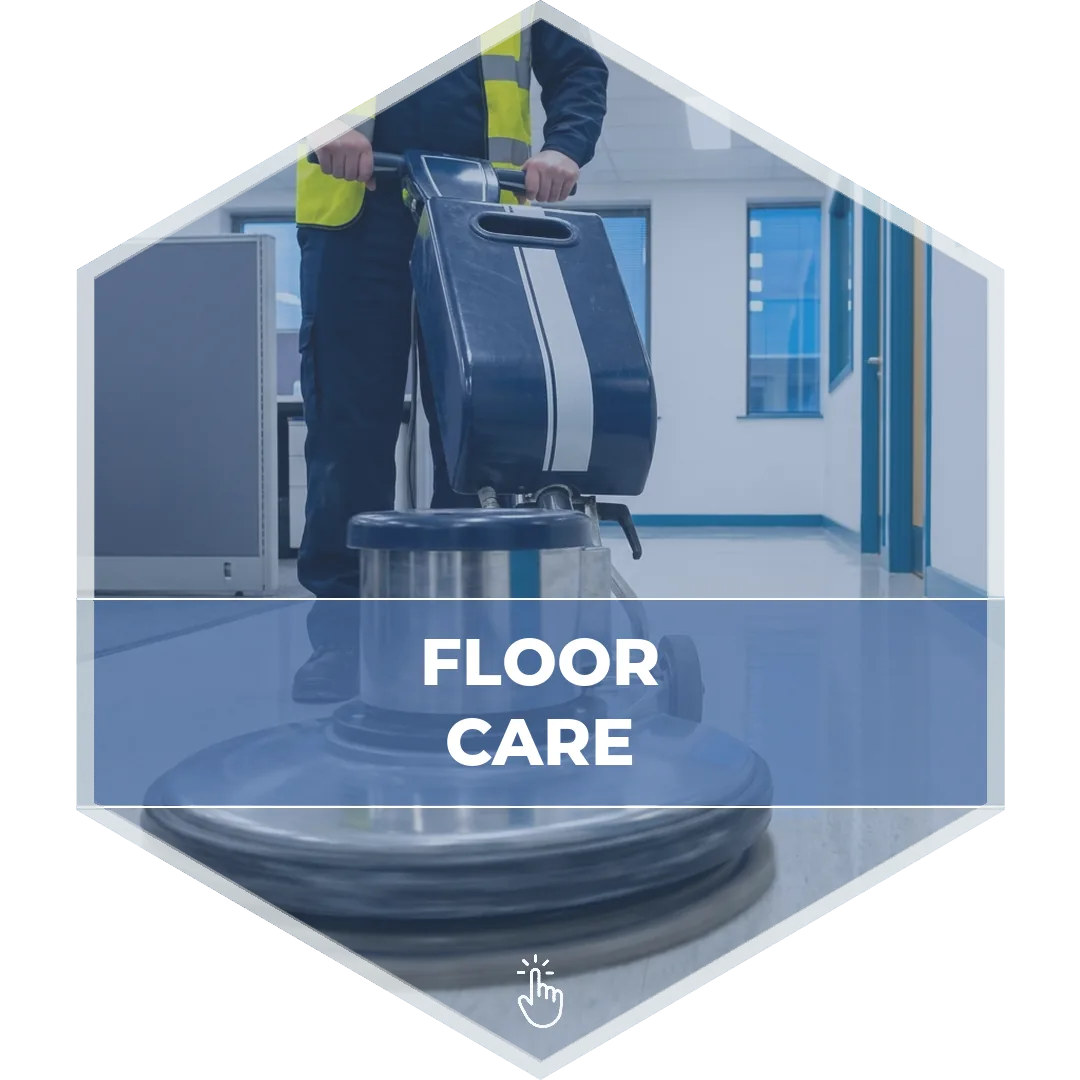
Scrubbing, burnishing, and refinishing for hard floors
See the Commercial Floor Care page ›
Restroom and spill checks between shifts
See the Day Porter Services page ›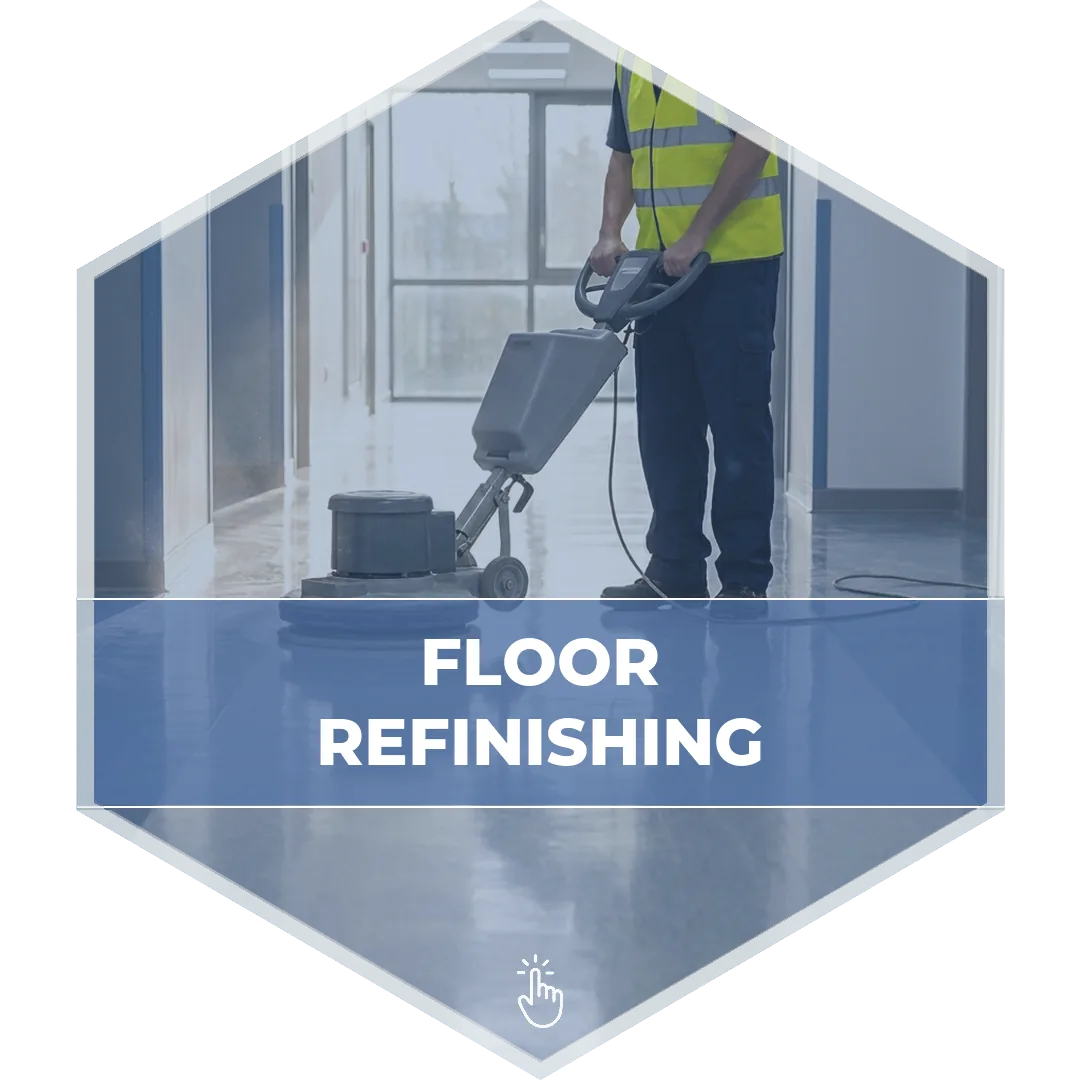
Refinishing for office and break room VCT
See the Strip and Wax page ›
Office glass and low-rise windows on a schedule
See the Window Cleaning page ›Crews route from our Marlborough headquarters to warehouses in all three states. Connecticut is a focus for warehouse work, with Hartford anchoring the routes. One quote can cover several buildings, each with its own zone plan. The locations page lists every town we serve.
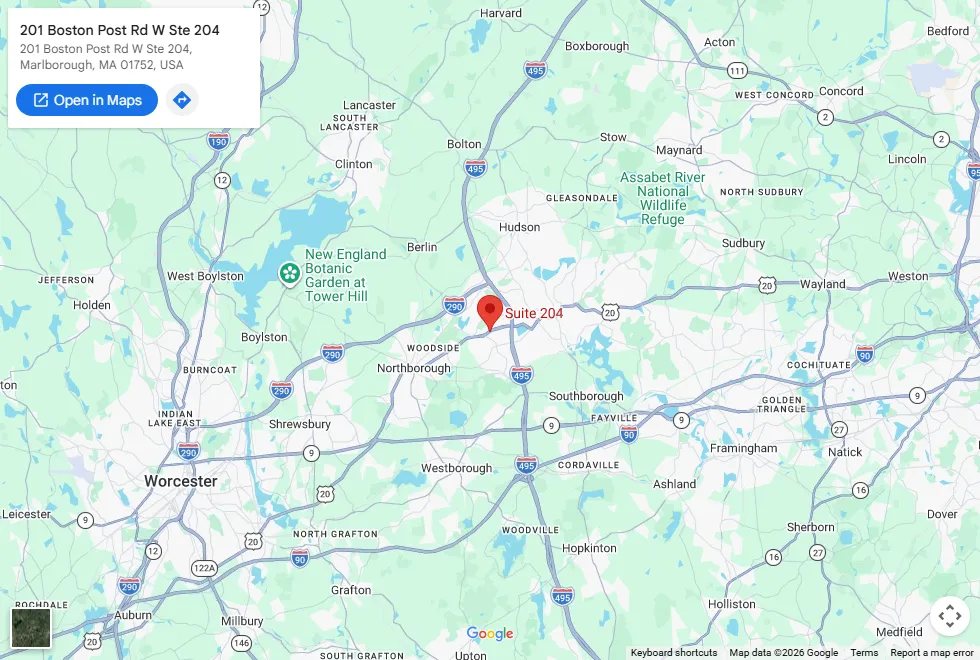
Warehouses along I-495, the Mass Pike, and I-290 from Marlborough, plus the Springfield area. Newton and Waltham mark the eastern edge of the service area.
Hartford anchors the Connecticut routes. Distribution buildings along I-91 and I-84, including Waterbury, New Haven, and West Hartford, are served as routes allow.
Providence and the I-95 corridor, with Cranston, Pawtucket, Woonsocket, and Smithfield served as routes allow.
Schedule a Walkthrough
A free walk of your floor, a written zone plan, and no long-term contract.
Meet the people behind Modular: Luiz Thomaz DaCosta, Owner and CEO, and Daniel DaCosta, Vice President of Operations.